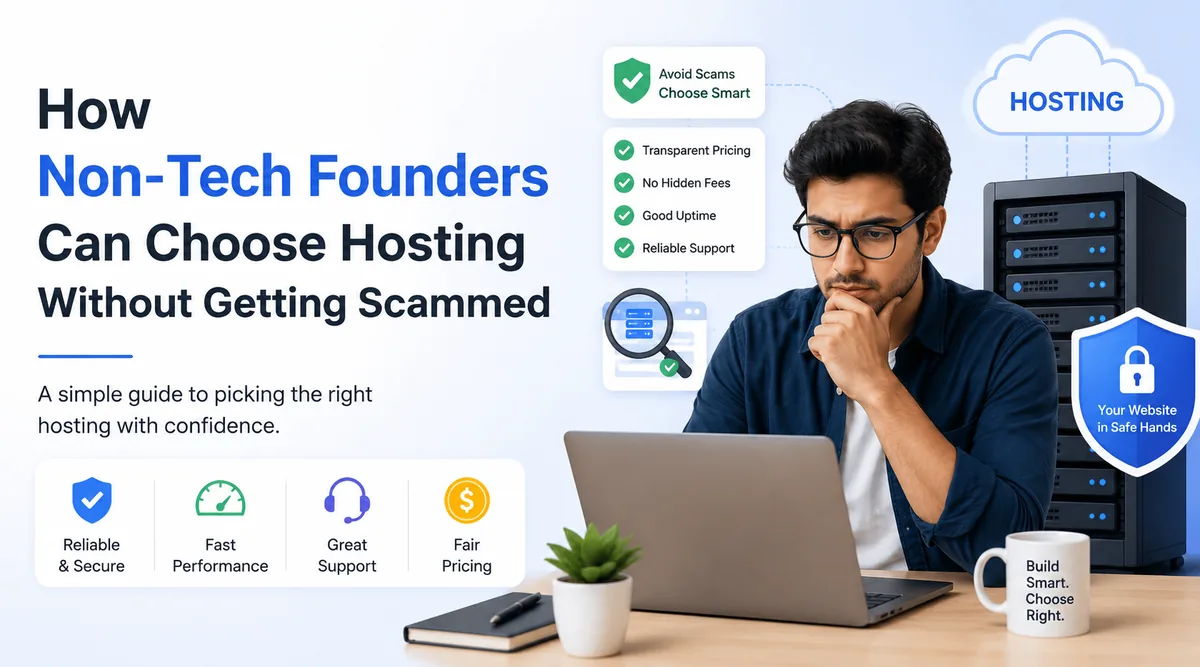
Most founders treat server space like a utility, similar to electricity—they just want the cheapest option that keeps the lights on. Opportunistic companies rely on this exact mindset to bury sneaky web hosting charges deep in the fine print. Trading actual hardware specs for an 'unlimited' marketing label isn't a cost-saving move—your host just sidelines your processes the moment a neighbor on your rack starts to scale.
The trap usually begins with a tempting offer for cheap shared hosting India that promises enterprise speeds for the price of a coffee. While saving capital is vital for a startup, these entry-level plans often lack basic security or use legacy hardware that can't handle modern web traffic. A smart founder looks past the flashy homepage and audits the actual hardware and support staff that will be keeping their business online. This ensures your website stays fast and accessible instead of becoming a constant source of technical stress.
The Myth of "Unlimited" Power
Most hosts mislead you when they claim to offer unlimited bandwidth. What they actually mean is "unlimited—until you actually start using it." The moment your website gets popular, these providers will throttle your speed or shut you down for "excessive resource usage." Expert founders skip the "unlimited" traps and look for plans that list specific RAM and CPU cores so they know exactly what they are paying for.
Feature Segregation: The Hidden Upsell
The biggest scam in the hosting world isn't a high price; it's a low price that comes with nothing. You'll sign up for a budget plan only to realize that daily backups, SSL security, and professional email are all "extra." By the time you add the essentials back in, that budget plan costs more than a premium one. High-quality providers include these as standard because a business website without a backup strategy or security is essentially an immense liability.
Why Distance Erodes Conversions
Many founders ignore where their server actually is. If your customers are in Mumbai but your server is in London, every single click has to travel thousands of miles. This creates latency, a technical term for the perceptible delay that makes your website feel sluggish. If a page takes more than three seconds to load, half your visitors will leave before they even see your product. You need a host with local data centers to keep the experience snappy for your specific audience.
Scalability is Your Insurance Policy
Don't bottleneck your business with a host that can't grow. Moving a website from one provider to another is a massive headache that often leads to lost data. You need a path from a basic setup to a powerful VPS or cloud environment without a total migration. If a provider doesn't have a clear tier system for growth, they aren't a partner; they are a roadblock. MilesWeb offers this growth path, letting you scale up your resources instantly as your traffic increases.
The "24/7 Support" Illusion
Most hosts promise 24/7 support, but usually, they just connect you to a representative who reads from a script and lacks the authority to fix anything. Real technical support means getting a systems engineer on the line who can actually look at your server logs. Before you buy, test their chat. If they can't answer a technical question about their infrastructure, seek a more competent provider. You need experts who solve problems, not salespeople who just apologize for downtime.
Infrastructure Essentials
Your hosting plan should be a complete toolkit, not a foundational-only rental. To run a professional operation, you need a system that handles the administrative burdens automatically so you can focus on sales. MilesWeb offers free professional email accounts and daily backups, which are non-negotiable for anyone who values their data and brand image. Having these tools integrated from day one prevents the systemic instability of retrofitting your security later.
"A slow website is the most expensive marketing mistake you can make." — Founder Proverb
Checking the Hardware Underneath
Don't just look at the price; look at the storage type. Traditional hard drives (HDDs) are obsolete for modern websites. You want NVMe SSD storage and LiteSpeed servers. These are significantly faster and can handle hundreds of visitors at once without crashing. It's like the difference between a bicycle and a sports car—both get you there, but only one can keep up with the fast lane.
The Renewal Rate Bait-and-Switch
Always check what happens after the first year. Many hosts lure you in with a 90% discount, then charge you five times the price when it's time to renew. A transparent host won't hide their renewal fees in a 50-page document. Additionally, watch out for "inode" limits. Hosts use this tactic to cap your total server files, which can throttle an e-commerce website before it even starts to scale.
Concluding Insights
Choosing a host is about more than finding a place to store files; it's about picking the engine for your business. If you focus on resource transparency and local server locations, you avoid the most common traps that sink new startups. By putting actual hardware specs ahead of 'unlimited' marketing traps, you're making sure your first impression on a customer isn't just fast—it's reliable and built on solid ground.
Building a business leveraging MilesWeb gives you the speed and stability you need without the unforeseen complications. Their setup includes the essentials—like daily data protection and professional email—so your brand feels established and reliable from the very first visitor. Picking a host that actually delivers on its promises turns your website into a massive advantage for your growth. A rock-solid server gives you the professional stability to focus on scaling your vision while your business grows.
Need Help With Your Website?
AS Enterprises builds fast, reliable websites and web applications for businesses across Chennai and Tamil Nadu — and you own your domain and hosting. See our website development service, our maintenance plans, or get a free consultation.