E-commerce has moved from optional to essential for retailers and brands across Chennai and Tamil Nadu. Whether you sell sarees, electronics, jewellery, food products or industrial goods, a well-built online store extends your reach far beyond your physical location and sells around the clock — even while you sleep. But building a store that actually sells involves far more than uploading products; it requires the right platform, a smooth buying experience, and a plan to drive traffic. This complete guide covers all of it.
What E-Commerce Development Involves
E-commerce development is the process of building an online store — product pages, categories, cart, checkout, payment processing, inventory and order management — that lets customers browse and buy from you online. It combines the design and development of a normal website with the operational plumbing a shop needs: payment gateways, shipping logic, tax configuration and stock management. Because there are more moving parts, quality and testing matter even more than on a standard site. See our full e-commerce development service.
Why Sell Online in 2026
Online shopping continues to grow rapidly in India, and buyers increasingly expect to research and purchase from their phones at any hour. An online store lets you reach customers well beyond your neighbourhood, sell 24/7 without extra staff, reduce dependence on marketplaces that charge rising commissions, and — crucially — own your customer relationships and data rather than renting them from a platform. For textile and apparel brands in particular, the opportunity is significant; see our e-commerce guide for textile brands. Electronics retailers can explore our electronics store e-commerce guide.
Choosing the Right Platform
Your platform shapes cost, flexibility, maintenance and how easily you can run the store day to day. There is no universally best choice — only the best fit for your catalog and goals.
- Shopify is a hosted, subscription-based platform that is the fastest route to a reliable, low-maintenance store. Ideal if you want simplicity and don’t want to manage hosting or updates. See Shopify development.
- WooCommerce is built on WordPress, offering more flexibility and lower platform fees, at the cost of managing your own hosting and updates. Ideal for content-plus-commerce sites.
- Magento is powerful but complex, suited only to large stores with development resources and big catalogs.
Compare them directly and choose with confidence: Shopify vs WooCommerce, WordPress vs Shopify and Magento vs Shopify.
Features Every Store Needs
- Rich product pages with multiple high-quality images, clear descriptions, specifications and real-time stock status.
- A simple, trusted checkout — the fewer steps, the higher your conversion rate.
- Mobile-first design, because the majority of shopping now happens on phones.
- Search and filters so shoppers can find products fast in a large catalog.
- Trust signals — reviews, secure-payment badges and clear return, shipping and privacy policies.
- Analytics and tracking so you can measure what sells and improve continually.
Our e-commerce glossary explains the terminology, and the e-commerce launch checklist makes sure nothing is missed before you go live.
Product Pages That Convert
The product page is where the sale is won or lost, yet it is often rushed. A high-converting product page removes doubt and makes buying easy. It uses multiple clear photos from different angles (and video where useful), a description that sells the benefit as well as the specs, honest sizing or dimension details, visible stock and delivery information, trust elements like reviews and secure-payment badges, and a prominent, unmissable “add to cart” button. For higher-value items, answering common questions right on the page — warranty, returns, compatibility — removes the last barriers to purchase. Poor product photography and vague descriptions are among the most common reasons stores underperform.
What an Online Store Costs
E-commerce stores in Chennai typically range from around ₹40,000 for a straightforward store to ₹2,50,000 or more for large, custom stores with extensive catalogs and integrations. The main cost drivers are catalog size, whether the design is custom or templated, and advanced features such as subscriptions, multi-vendor support or ERP integration.
| Store Type | Typical Cost |
|---|---|
| Starter store (small catalog) | ₹40,000 – ₹75,000 |
| Standard custom store | ₹75,000 – ₹1,50,000 |
| Large / advanced store | ₹1,50,000 – ₹2,50,000+ |
For context and a full breakdown, read e-commerce website cost in Chennai and see our overall pricing.
Payments, Shipping & GST in India
An Indian online store has specific operational needs that must be set up correctly from day one. You need a payment gateway that supports UPI, cards, net banking and, for many audiences, cash on delivery. You need accurate shipping rates and zones reflecting real courier costs, and clear delivery timelines. And you need correct GST configuration so pricing, invoicing and tax reporting are compliant. Getting these right at setup avoids costly, stressful problems later — incorrect tax, failed payments or shipping losses. We handle all of this as part of building your store.
Launching Your Store
Before going live, test the entire journey end to end — browsing, adding to cart, checkout, a real test payment, order confirmation and the notification emails. A single broken step in this chain means lost sales you may never notice. Our e-commerce launch checklist and pre-launch QA checklist walk you through every check so you open for business with confidence rather than crossed fingers.
Marketing Your Store
Building a store is step one; driving traffic is step two, and it is where many stores stall. A store with no visitors makes no sales. The main channels are SEO to rank for product and category searches over time, Google Ads and Meta Ads for immediate, targeted sales, and email and social media for ongoing engagement. Most successful stores combine paid ads for quick traction with SEO for sustainable, lower-cost traffic. Our SEO and full digital marketing services drive qualified shoppers to your store and tie the channels together.
Turning Buyers Into Repeat Customers
Acquiring a customer is expensive; keeping one is far cheaper and more profitable. The most successful stores invest in retention: email flows that welcome new customers and win back lapsed ones, loyalty incentives, well-timed offers, and simply delivering a great experience that earns repeat purchases and word of mouth. Collecting reviews from happy buyers also feeds back into both trust and SEO. Building retention in from the start turns a store from a one-off sales channel into a compounding asset.
Common E-Commerce Mistakes
- Poor product photography. Online, images do the selling — weak visuals sink conversions.
- A complicated checkout. Every extra step and field loses sales.
- Ignoring mobile. Most shoppers are on phones; a poor mobile experience is fatal.
- No marketing plan. A store with no traffic strategy makes no sales, however good it looks.
- Weak trust signals. Shoppers won’t enter card details on a site they don’t trust.
- Getting GST or shipping wrong. Operational errors quietly erode margins and cause disputes.
Planning Your Catalog & Categories
Before a single product goes online, the structure of your catalog deserves real thought — it shapes how easily shoppers find products and how well your store ranks. Group products into clear, logical categories and subcategories that match how customers actually think and search, not how your business is organised internally. Well-named categories become valuable landing pages in their own right, ranking for searches like “cotton sarees online” or “LED TVs Chennai.”
Plan consistent product attributes (size, colour, material, brand) so shoppers can filter effectively, and think about how the catalog will grow. A store that is well-structured from the start scales smoothly; one that isn’t becomes a tangle that frustrates both customers and search engines. We plan catalog architecture as part of building your store, so it works on day one and as you add hundreds more products.
Conversion Rate Optimization
Getting traffic is only half the battle; converting that traffic into sales is where profit is made. Conversion rate optimization (CRO) is the ongoing work of turning more of your visitors into buyers — and small improvements compound. The highest-impact levers are usually a faster site, clearer product photography, a simpler checkout with fewer steps and form fields, visible trust signals, transparent pricing and shipping, and prominent, reassuring calls to action.
Even modest gains matter enormously: lifting a store’s conversion rate from 1% to 1.5% is a 50% increase in sales from the same traffic. That is why CRO often delivers a better return than simply buying more traffic. Reducing friction — especially at checkout and on mobile — is the fastest path to more revenue from the visitors you already have.
Abandoned Cart Recovery
A large share of shoppers add products to their cart and then leave without buying — distracted, comparing prices, or hesitating at checkout. Abandoned cart recovery wins back a meaningful portion of these near-misses. The main tactics are automated reminder emails (and, increasingly, WhatsApp messages) sent shortly after abandonment, sometimes with a gentle incentive; a saved cart so customers can pick up where they left off; and removing the friction that caused the abandonment in the first place — unexpected shipping costs, forced account creation, or a clunky checkout.
Because these shoppers already wanted to buy, recovering them is one of the cheapest sources of extra revenue available to a store. Building recovery flows in from launch means you capture sales that would otherwise be lost silently.
E-Commerce SEO in Depth
SEO for online stores has its own priorities beyond standard on-page work. Category pages are often your most valuable SEO assets — optimise their titles, descriptions and content for the terms shoppers search. Product pages need unique descriptions (never just the manufacturer’s copy duplicated across the web), product schema to earn rich results with prices and ratings, and clear, keyword-relevant titles. Technical health matters at scale: fast loading, clean URLs, proper handling of out-of-stock and duplicate pages, and a well-structured sitemap.
Content also drives store SEO — buying guides, comparisons and how-to articles attract shoppers early in their research and build topical authority. Combined with the fundamentals in our SEO guide, store-specific SEO turns your catalog into a long-term, compounding source of free traffic that reduces your dependence on paid ads over time.
Inventory & Order Management
Behind every smooth storefront is reliable operations. Inventory management keeps stock levels accurate so you never sell what you can’t deliver or lose sales to phantom stock-outs. Order management handles the flow from purchase to delivery — confirmation, packing, dispatch, tracking and returns — ideally with as much automation as possible so it scales without adding staff. For growing businesses, integrating the store with accounting or ERP systems removes double-entry and errors.
These operational details rarely excite anyone, but getting them wrong — overselling, delayed dispatch, messy returns — quickly damages reviews and repeat business. We set up sensible inventory and order workflows so the store runs reliably from your first order to your thousandth.
Security & Building Buyer Trust
Shoppers will only enter payment details on a store they trust, so security and trust-building go hand in hand. Technically, a store needs HTTPS everywhere, a reputable payment gateway that handles card data securely (so sensitive details never touch your own servers), and regular updates and backups. Visibly, trust is built through clear return, shipping and privacy policies, genuine customer reviews, recognisable payment badges, real contact information, and a professional, polished design.
Trust is especially important for newer stores without an established brand. Every reassurance you add — a visible phone number, an easy returns promise, real reviews, secure-checkout signals — removes a reason to hesitate. Our website security checklist covers the technical side, and building trust into the design is part of how we approach every store.
The Metrics That Matter
Running a successful store means watching the right numbers. The core e-commerce metrics are conversion rate (the percentage of visitors who buy), average order value (how much each order is worth), traffic and its sources, cart abandonment rate, customer acquisition cost (what you pay to gain a customer), and customer lifetime value (what a customer is worth over time). Together these tell you whether the store is healthy and where to focus.
The most profitable stores obsess less over raw traffic and more over the relationship between acquisition cost and lifetime value — because a store that turns buyers into repeat customers can afford to acquire them and still grow profitably. Setting up proper analytics and e-commerce tracking from launch, as covered in our launch checklist, gives you these numbers from day one so you can make decisions with data rather than guesswork.
Choosing What to Sell & Market Fit
The most beautifully built store fails if it sells the wrong thing to the wrong people. Before investing heavily, validate that there is real demand for your products at a price that works, and that you can reach the buyers profitably. Signs of good fit include existing offline demand you can extend online, products with healthy margins after payment and shipping costs, and a clear audience you can reach through search or ads. Many successful Chennai stores start by taking proven offline products online rather than launching something untested.
It’s also worth focusing initially rather than launching a vast catalog — a tight range of your best-selling, best-margin products is easier to market, photograph and manage, and you can expand once you understand what sells. Getting product-market fit right is more important to success than any technical decision about the store itself.
Pricing & Shipping Strategy
Pricing and shipping quietly make or break e-commerce profitability, and shipping in particular trips up new stores. Unexpected shipping costs at checkout are one of the biggest causes of cart abandonment, so decide your approach deliberately: free shipping (with the cost built into prices), flat-rate shipping, or real-time calculated rates — each has trade-offs. Many stores find free shipping above a minimum order both lifts average order value and reduces abandonment.
On pricing, factor in every cost — product, payment gateway fees, shipping, packaging, returns and marketing — before setting prices, so your margins are real. Transparent, predictable pricing and shipping build trust; hidden costs destroy it. We help configure sensible pricing and shipping logic so your store is both competitive and profitable.
Mobile Commerce & UPI
In India, e-commerce is overwhelmingly mobile, and payments are increasingly UPI-first. This has direct implications for how your store should be built. The mobile experience isn’t a secondary consideration — it is the primary one. That means large tap targets, fast loading on mobile data, minimal typing, and a checkout optimised for one-handed phone use. Offering UPI alongside cards, net banking and cash on delivery removes payment friction for the majority of Indian shoppers who prefer it.
Stores that treat mobile and UPI as afterthoughts leave significant sales on the table. Every store we build is mobile-first and configured with the payment methods Indian customers actually use, because matching how your customers really shop and pay is one of the simplest ways to increase conversions.
Email & WhatsApp Marketing for Stores
Owning a direct line to your customers is one of the biggest advantages of running your own store rather than selling only on marketplaces. Email and, increasingly, WhatsApp let you bring customers back at almost no cost. Effective flows include welcome messages for new subscribers, order and shipping updates, abandoned-cart reminders, win-back messages for lapsed customers, and occasional offers or new-arrival announcements to your existing list.
For Indian audiences, WhatsApp is especially powerful given how widely it’s used and how high its open rates are. Building an email and WhatsApp list from day one, and messaging it thoughtfully (helpful and well-timed, not spammy), turns one-time buyers into repeat customers — the foundation of a profitable store.
Returns & Customer Service
How you handle returns and customer questions directly shapes reviews, repeat business and word of mouth. A clear, fair and easy-to-find returns policy actually increases sales, because it removes a major hesitation before purchase — shoppers buy more confidently when they know they can return an item easily. Fast, helpful responses to pre- and post-sale questions, across the channels your customers use (including WhatsApp), turn anxious buyers into loyal ones.
Treating customer service as a growth driver rather than a cost centre pays off: happy customers leave positive reviews, buy again and recommend you, while poor service generates refunds, bad reviews and lost trust. Building simple, reliable returns and support processes into your store operations protects both your reputation and your margins.
Your Own Store vs Marketplaces
Many businesses sell on marketplaces like Amazon or Flipkart, and these offer instant reach — but at a cost. Marketplaces charge significant commissions, own the customer relationship and data, and put you in direct price competition with everyone else on the platform. Your own store costs more to drive traffic to initially, but it keeps margins, builds your brand, and lets you own and remarket to your customers.
The strongest approach for most businesses is not either/or but both: use marketplaces for reach and discovery while building your own store as the profitable, brand-building core you control. Over time, shifting more sales to your own store improves margins and independence. We build stores designed to be the profitable hub of that strategy.
Scaling From First Sale to Growth
Launching is the beginning. Growing a store means systematically improving each part of the machine: driving more qualified traffic through SEO and ads, converting more of it through CRO, increasing average order value through bundles and upsells, and increasing repeat purchases through retention. Because these multiply together, steady improvements in each compound into significant growth.
As volume grows, invest in the operations and automation that let you scale without chaos — reliable inventory, efficient fulfilment, and good analytics to guide decisions. The stores that scale successfully treat the store as a living asset to be improved continually, guided by data, rather than a project that’s “done” at launch. Whether you’re making your first sale or your ten-thousandth, our e-commerce team and digital marketing services can help you grow.
Product Photography That Sells
Online, customers can’t touch, hold or try your products — so your photography does the selling. It is one of the highest-return investments a store can make, and one where cutting corners is immediately visible. Strong product photography means multiple clear images from different angles, consistent lighting and backgrounds, close-ups of important details, and context or lifestyle shots that help buyers imagine using the product. For clothing and jewellery, showing the item worn or in scale matters enormously.
Poor, inconsistent or low-resolution images are among the most common reasons stores underperform, because they undermine both desire and trust. You don’t always need an expensive studio — consistent, well-lit, high-resolution photos on a clean background go a long way — but the quality has to be there. Great visuals lift conversions across every product, making photography one of the best places to invest before launch.
Site Search & Navigation
As your catalog grows, how easily shoppers can find what they want becomes critical. Good navigation and search directly affect sales — visitors who use site search often convert at higher rates because they know what they’re looking for, so a fast, forgiving search box (one that handles typos and synonyms) pays off. Clear category structure, useful filters (by price, size, colour, brand) and a logical menu help everyone else browse without frustration.
The principle is simple: every extra click or dead end between a shopper and the product they want is a chance to lose the sale. Investing in intuitive navigation and reliable search — especially on mobile, where screen space is limited — keeps shoppers moving toward checkout. We plan navigation and search around how your customers actually browse, so your catalog stays easy to shop even as it grows.
Festival & Seasonal Sales in India
Indian retail runs on a rhythm of festivals and seasons — Diwali, Pongal, wedding season, back-to-school and more — and a store that plans for these captures significant extra revenue. Preparing ahead means readying festival collections and offers, updating the store’s look for the occasion, scaling inventory for expected demand, and planning marketing campaigns (email, WhatsApp and ads) in advance rather than scrambling last minute.
These peaks are also when customer acquisition is easiest, because buying intent is high — so it’s the ideal time to win new customers you can retain year-round. Building a simple seasonal calendar for your store, and preparing for each peak in advance, turns predictable demand into predictable sales. We help stores plan for and capitalise on these high-intent seasonal windows.
Loyalty & Referral Programs
Because repeat customers are far more profitable than new ones, structured loyalty and referral programs can meaningfully lift a store’s growth. A loyalty program — points, tiers or simple repeat-purchase rewards — gives customers a reason to come back to you rather than a competitor. A referral program turns happy customers into a marketing channel by rewarding them for bringing friends, which is especially powerful in India where personal recommendations carry great weight.
These don’t need to be complex to work; even a simple “refer a friend, both get a discount” offer or a modest loyalty reward can measurably increase repeat purchases and word of mouth. Combined with good email and WhatsApp marketing, loyalty and referrals compound your customer base over time — turning each satisfied buyer into both a repeat customer and a source of new ones.
Explore the full e-commerce cluster
→ E-Commerce Development Service → E-Commerce Website Cost → Shopify vs WooCommerce → E-Commerce Launch Checklist → Textile & Apparel Stores → Electronics Stores → All Complete GuidesFrequently Asked Questions
Real Projects. Real Results.
A selection of websites we have designed and built for businesses across Tamil Nadu.

Wood Crops
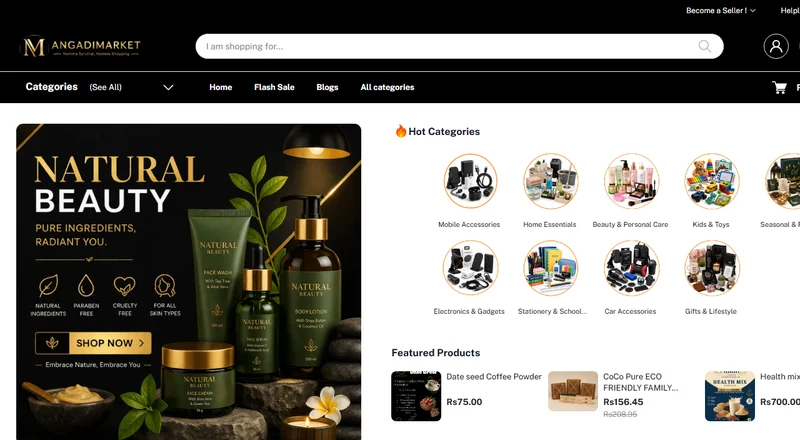
Angadi Market

Sri Rakhi Interiors

MSJ Jewellers

Grow Value Properties

Infibee
What Our Clients Say
Real stories from business owners who partnered with us for growth.
"AS Enterprises rebuilt our interior design studio website in under 2 weeks. Our enquiries and customer calls doubled within a month of launching. Their local SEO optimization works wonders!"
"Working with AS Enterprises for our fashion store was the best business decision. They developed a fast Shopify store and set up our Meta Ads. Our online sales tripled in 60 days!"
"From brand consulting to launching our digital presence, they were professional, prompt, and result-oriented. Direct developer communication saved us weeks of email exchanges."
Official Partners
Platforms and payment gateways we build with and integrate for our clients.
 G
Google Partner
G
Google Partner
 CC
CCAvenue
CC
CCAvenue
 S
Shiprocket
S
Shiprocket
 🛒
Shopify Partners
🛒
Shopify Partners
 R
Rediff
R
Rediff
 Z
Zoho
Z
Zoho
 ₹
Razorpay
₹
Razorpay
 P
PayU
P
PayU
 💬
tawk.to
💬
tawk.to
Ready to Launch Your Online Store?
AS Enterprises helps Chennai businesses turn strategy into results. Get a free, no-obligation consultation.