Search engine optimization (SEO) is the most cost-effective marketing channel available to most Chennai businesses. Done well, it delivers a steady stream of free, high-intent traffic — people actively searching for exactly what you offer — and that traffic compounds month after month into an asset that keeps working long after the effort is spent. This complete guide explains, in plain language, how SEO actually works, what it involves, and how to build rankings that last rather than chasing quick tricks that don’t.
Whether you are a clinic in Adyar, a manufacturer in Ambattur or a boutique in Nungambakkam, the principles are the same. By the end of this guide you will understand every part of SEO well enough to do the basics yourself, brief an agency confidently, and tell the difference between real SEO and empty promises.
What SEO Is and How It Works
SEO is the practice of improving your website so it ranks higher in Google’s organic — that is, unpaid — search results for the terms your customers search. Google’s entire business depends on showing the most helpful, trustworthy result for every query, so its ranking systems try to identify pages that best match what a searcher wants. SEO is simply the work of making your pages that best match.
Behind the scenes, Google discovers pages by crawling the web, stores them by indexing, and then ranks them for each query using hundreds of signals. Those signals cluster around a few themes: how relevant your content is to the search, how good the experience is (speed, mobile-friendliness), and how much authority and trust your site has earned. For a beginner-friendly primer, start with what is SEO and how Google ranks websites.
Why SEO Matters for Chennai Businesses
When someone searches “web designer near me,” “best dentist in Adyar” or “uPVC windows Chennai,” SEO decides whether your business appears at the moment of highest intent. Ranking on page one means free, recurring leads without paying for every click. Unlike advertising, which stops delivering the instant you stop paying, SEO builds a durable asset: rankings you earn today keep bringing traffic tomorrow.
That does not mean SEO replaces ads — the two work best together, with ads delivering immediate leads while SEO builds long-term free traffic. To understand the trade-off clearly, see our comparison of organic SEO vs paid ads and the deeper SEO vs Google Ads breakdown.
The Three Pillars of SEO
Everything in SEO fits into three connected areas, and a strong strategy works on all three at once:
- On-page SEO — optimising your content and the elements on each page so they clearly match what people search.
- Technical SEO — making sure your site is fast, mobile-friendly and easy for Google to crawl and understand.
- Off-page SEO — building your site’s authority and trust through backlinks, citations and mentions from other reputable sites.
Neglecting any one pillar holds back the others. Great content on a slow, broken site won’t rank; a technically perfect site with thin content has nothing to rank; and even excellent content and technicals struggle without any authority behind them.
Keyword Research & Search Intent
SEO begins with understanding the exact words your customers type and, more importantly, the intent behind them. Keywords fall into broad categories: informational (“how much does a website cost”), commercial (“best web design company Chennai”) and transactional (“hire web developer Chennai”). Matching your page to the right intent is what makes it rank and convert.
A simple, effective process is to list your services in plain terms, expand them using Google autocomplete and the “People also ask” box, check volumes with free tools like Google Keyword Planner, and map one primary keyword to each page. For Chennai businesses, adding local terms — area names, “near me,” “in Chennai” — captures the highest-intent local searches. Our guide to keyword research basics walks through it step by step.
On-Page SEO in Depth
On-page SEO is everything you control directly on a page. The essentials for every important page are: target one primary keyword; write a title tag with that keyword near the start and under about sixty characters; craft a compelling meta description under about 155 characters; use a single clear H1; structure the page with logical H2 and H3 headings that cover subtopics; use the keyword naturally in the opening and throughout; add descriptive alt text to images; include internal links to related pages; and keep the URL clean and readable.
The goal is not to stuff keywords — that reads badly and can hurt rankings — but to cover the topic so thoroughly and clearly that the page is genuinely the best answer. Work through our on-page SEO checklist for every page, learn to write click-worthy meta titles and descriptions, and keep every page focused with our content writing checklist.
Technical SEO in Depth
Technical SEO makes sure Google can find, crawl, understand and rank your pages — and that visitors get a fast, smooth experience. The essentials include HTTPS security, mobile-friendliness, fast Core Web Vitals, an XML sitemap submitted to Google Search Console, a correct robots.txt, clean URL structure, schema markup for rich results, canonical tags to avoid duplicate content, and no broken links.
Many otherwise excellent sites are quietly held back by technical problems: pages accidentally blocked from indexing, painfully slow load times, or duplicate content confusing Google about which page to rank. Our technical SEO checklist covers every item, and our website speed optimization service tackles the performance side directly. If your site simply isn’t appearing at all, our guide on why your website isn’t ranking helps you diagnose the cause.
Content & Topical Authority
Content is how you earn rankings and trust at scale. Google increasingly rewards sites that demonstrate genuine expertise across a topic, not just a single page. The most effective way to build that is the pillar-and-cluster model: a comprehensive pillar page (like this one) linked to many focused supporting articles, all interlinking naturally. This signals topical authority — that you thoroughly cover a subject — and it is exactly how we structure content for our clients and ourselves.
Good SEO content answers real questions in the searcher’s own language, is thorough without padding, and is structured to be scanned. It also aligns with Google’s emphasis on experience, expertise, authoritativeness and trust. To decode the terminology, keep our SEO glossary handy.
Off-Page SEO & Backlinks
Off-page SEO builds your site’s authority, primarily through backlinks — links from other websites that act as votes of confidence. One link from a respected, relevant site is worth far more than dozens from low-quality or irrelevant ones, and paid link schemes can actively harm you. Ethical link-building includes creating genuinely useful content people want to reference, listing in reputable directories like Justdial and Sulekha, guest posting on relevant blogs, earning local press mentions, and partnering with related businesses.
Learn the fundamentals in backlinks explained for beginners. Ethical, sustainable link-building is part of our SEO services.
Local SEO for Chennai
For most Chennai businesses, local SEO is the single highest-return channel. It gets you into Google Maps, the “local pack” of three businesses shown for local searches, and “near me” results — all high-intent moments where the searcher is ready to act. The foundations are a fully optimised Google Business Profile, consistent name-address-phone (NAP) details everywhere, steady genuine reviews, local citations in trusted directories, and location-specific pages on your website.
Follow our local SEO guide and the practical local SEO checklist. We also build dedicated location pages for every area we serve — from OMR to T Nagar — which reinforce local relevance and help you rank in each neighbourhood.
Mastering Your Google Business Profile
Your Google Business Profile is often the very first thing a local customer sees, and for many searches it matters more than your website. A fully optimised profile can bring in calls, direction requests and visits before anyone clicks through to your site. Optimising it means completing every field, choosing accurate primary and secondary categories, adding real photos, listing your services, posting regular updates, and — above all — consistently collecting and replying to reviews.
Reviews are the highest-impact lever most businesses have: their volume, recency and rating strongly influence both rankings and whether customers choose you over a competitor. Our step-by-step Google Business Profile optimization guide covers the whole process.
How Long SEO Takes
SEO is a long game, and honesty here matters. Most businesses see meaningful movement in three to six months, with larger gains at six to twelve months, depending on competition, your site’s current authority and how much quality content you publish. Local SEO can show results faster — sometimes within weeks — especially through the Google Business Profile. Anyone promising page-one rankings in days is either misunderstanding SEO or misleading you. For a realistic month-by-month view, read how long SEO takes to work.
Measuring SEO Success
Track the metrics that reflect business impact, not vanity numbers. The essentials: keyword rankings for your target terms, organic traffic, and — most importantly — enquiries and sales that come from organic search. Free tools make this straightforward: Google Search Console shows which queries you rank for and any technical issues, while Google Analytics shows traffic and conversions. The true measure of SEO is not traffic for its own sake but qualified leads at a lower cost per lead than paid channels.
Common SEO Mistakes
- Expecting instant results. SEO compounds over months; impatience leads to abandoning it just before it pays off.
- Keyword stuffing. Unnatural repetition reads badly and can hurt rankings.
- Ignoring local SEO. For local businesses, this is the biggest missed opportunity.
- Buying cheap links. Low-quality link schemes risk penalties.
- Thin content. Pages that don’t fully answer the search won’t rank.
- Neglecting technical health. Speed and crawlability problems quietly cap everything else.
DIY vs Hiring an SEO Agency
You can and should handle the basics yourself: claiming and optimising your Google Business Profile, sound on-page SEO, and publishing helpful content using our free guides. This alone puts many local businesses ahead of competitors who do nothing. Competitive keywords, technical work and sustained content and link-building, however, usually benefit from professional help — both for the expertise and for the consistent effort SEO demands. If you’d rather focus on running your business, our SEO services handle it end to end.
E-E-A-T & Google's Helpful Content
Google increasingly rewards content that demonstrates real Experience, Expertise, Authoritativeness and Trust — often shortened to E-E-A-T. In practice this means content written by people who genuinely know the subject, backed by credentials, real examples and accurate information, published on a site that is transparent about who is behind it. Google’s “helpful content” systems are designed to reward pages created to help people first, not to game search engines.
For a Chennai business, building E-E-A-T is very practical: publish genuinely useful guides in your area of expertise, show real credentials and experience, include real case studies and reviews, keep an informative About page and clear contact details, and cite accurate, up-to-date information. This is exactly why we structure client sites around helpful, expert content and visible trust signals — it satisfies both readers and Google’s quality systems, and it is far more durable than any short-term trick.
Schema Markup & Rich Results
Schema markup is structured data — a small piece of code that tells Google exactly what your content is: a local business, a product, an FAQ, a review, an article. Google uses it to understand your pages better and to show enhanced “rich results” in search, such as star ratings, FAQ dropdowns, and business details in the knowledge panel. Rich results take up more space and attract more clicks, so schema is a genuine competitive edge.
The most valuable schema types for local businesses are LocalBusiness (your NAP, hours and area served), FAQ (to earn expandable answers in search), Product and Review (for stores), and BreadcrumbList (for cleaner result listings). Every site and page we build includes the appropriate schema by default — it’s one of the highest-leverage technical steps in SEO, and one many DIY sites miss entirely.
AI Search, Voice & Answer Engines
Search is changing. More people ask questions by voice, and AI answer engines — from Google’s AI overviews to assistants like ChatGPT — increasingly summarise answers directly rather than sending a click. Optimising for this newer landscape is sometimes called Answer Engine Optimization (AEO) or Generative Engine Optimization (GEO), but the fundamentals are reassuringly familiar: clear, well-structured content that directly answers real questions is exactly what both traditional search and AI engines favour.
Practical steps that help you appear in AI and voice answers include writing in a clear question-and-answer format, using FAQ schema, keeping answers concise and factual, structuring content with descriptive headings, and being the genuinely authoritative source on your topic. The businesses that win in AI search are the ones that already publish the clearest, most helpful, best-structured content — which is the same content that ranks well organically. Building topical authority now positions you for both today’s search and tomorrow’s.
SEO for Different Business Types
SEO priorities shift depending on your business. A local service business (clinic, salon, contractor) should focus overwhelmingly on local SEO — Google Business Profile, reviews, and location pages — because most of its customers search locally. An e-commerce store should prioritise product and category page optimisation, technical health at scale, and product schema. A B2B or manufacturing business should target specific product, capability and industry keywords with detailed, authoritative pages that satisfy researching buyers. A professional services firm (law, accounting, consulting) wins on expertise-led content and strong credibility signals.
We tailor SEO to your model rather than applying a one-size-fits-all checklist. Our industry pages — from healthcare to manufacturing — and industry guides like the manufacturing SEO guide and real estate SEO guide reflect how differently each sector needs to approach search.
Free SEO Tools You Can Use
You don’t need expensive software to start. A handful of free tools cover most of what a small business needs. Google Search Console is essential — it shows which queries you rank for, your click-through rates, indexing status and technical issues, all straight from Google. Google Analytics shows your traffic and conversions. Google Keyword Planner and simple Google autocomplete and “People also ask” help with keyword research. Google PageSpeed Insights checks your Core Web Vitals. Google Business Profile itself gives insights into how customers find and act on your local listing.
Set up Search Console and Analytics first — they are free, official, and reveal the majority of what you need to improve. Our SEO checklist and technical SEO checklist tell you what to look for once they’re connected.
A 90-Day SEO Action Plan
SEO can feel overwhelming, so here is a realistic first-90-days plan for a Chennai business starting out. Month 1 — foundations: set up Google Search Console and Analytics; fully optimise your Google Business Profile; run a technical audit and fix critical issues (HTTPS, speed, mobile, indexing); research and map your core keywords to pages. Month 2 — on-page and content: optimise your key service and location pages (titles, headings, content, schema); start publishing helpful content targeting your priority keywords; begin actively collecting Google reviews. Month 3 — authority and momentum: build initial citations in trusted directories; earn a few relevant local links; continue publishing; review Search Console data and double down on what’s gaining traction.
By day 90 you won’t have finished — SEO is ongoing — but you’ll have a technically sound, well-optimised site with fresh content, an active review profile and early rankings to build on. From there it compounds. If you’d rather have this executed for you consistently, that’s exactly what our SEO services deliver.
Link-Building Strategies That Work
Backlinks remain one of the strongest ranking signals, but the way you earn them matters enormously. Sustainable, safe link-building focuses on genuine relevance and quality. The strategies that reliably work for Chennai businesses include listing in trusted directories (Justdial, Sulekha, IndiaMART, industry bodies and local chambers of commerce), earning links through genuinely useful content that others want to reference, guest posting on relevant local and industry blogs, building relationships with complementary businesses for natural cross-links, and earning local press or community mentions through newsworthy activity.
What to avoid is just as important: buying bulk links, using link farms, or exchanging links at scale can all trigger penalties that are painful to recover from. The goal is a steady trickle of quality, relevant links rather than a sudden flood of low-quality ones. Ethical link-building is slower but durable, and it forms part of our SEO services. Our guide on backlinks for beginners explains the fundamentals in more depth.
Competitor Analysis for SEO
Your competitors’ rankings are a free roadmap. By studying the businesses already ranking for your target keywords, you learn what Google rewards in your niche and where the gaps are. A practical competitor analysis looks at which keywords they rank for, what content they’ve published, how their site is structured, what pages they have that you don’t, and where their backlinks come from. You don’t need expensive tools to start — simply searching your key terms and studying the top results reveals a great deal.
The aim isn’t to copy but to identify opportunities: keywords they’ve missed, topics you can cover more thoroughly, content types they lack, and local angles they ignore. For many Chennai businesses, competitors neglect local SEO and location-specific content — a gap you can exploit quickly. Turning competitor insight into a focused content and optimisation plan is one of the fastest ways to make progress.
Content Refresh & Maintaining Rankings
SEO isn’t “set and forget.” Rankings can slip over time as competitors improve, information ages, and Google’s expectations evolve. Maintaining rankings means periodically refreshing your best content — updating facts and figures, improving depth, adding new sections, refreshing the publish date where genuinely updated, and strengthening internal links. A page that ranked well two years ago often just needs updating to reclaim or improve its position, which is far less effort than creating something new.
A simple habit of reviewing your top pages every few months, checking Search Console for pages losing impressions, and refreshing them keeps your hard-won rankings healthy. This ongoing care is a core part of professional SEO, and it’s why SEO is best treated as a continuous programme rather than a one-off project.
Common SEO Myths, Debunked
SEO attracts more myths than almost any marketing discipline, and believing them wastes money. A few worth clearing up: “SEO is a one-time job” — it’s ongoing, because competitors and Google keep moving. “You can guarantee the #1 ranking” — no one legitimately can; Google’s results aren’t for sale organically. “More keywords on the page is better” — keyword stuffing hurts, not helps. “Meta keywords tag still matters” — Google has ignored it for years. “More pages always means more traffic” — thin, low-quality pages can drag a whole site down.
The through-line is simple: shortcuts and tricks don’t last, while genuinely helpful content, a sound technical foundation and earned authority do. Any agency promising instant, guaranteed #1 rankings is a red flag — real SEO is honest about timelines and effort.
How to Choose an SEO Agency
If you decide to hire help, choosing the right SEO partner matters as much as the SEO itself. Look for transparency about what they’ll actually do, realistic promises about timelines (be wary of anyone guaranteeing rankings), clear reporting tied to business outcomes like leads rather than vanity metrics, ethical “white-hat” methods, and genuine local reviews or references. Ask exactly what work is included each month, how they measure success, and what happens if results are slow.
Avoid agencies that are vague about their methods, promise the world for a suspiciously low price, or focus on meaningless metrics. Good SEO is a partnership built on realistic expectations and steady, honest work. That’s the approach we take with our SEO services — clear scope, honest timelines and reporting focused on the enquiries that grow your business.
Image, Video & Visual Search SEO
Search isn’t only text. Images and video are an increasingly important part of SEO, both for ranking in image and video search and for enriching normal results. Optimising images means using descriptive file names and alt text, compressing them for speed (ideally in modern formats like WebP), and adding them where they genuinely help the reader. For product and local businesses, good images can appear directly in search and drive real traffic.
Video is a growing opportunity too — explainer videos, product demos and how-to content can rank in Google and on YouTube, reaching people who prefer to watch rather than read. Even embedding relevant video on a page can increase the time visitors spend there, a positive signal. For visual-heavy businesses like restaurants, jewellers, interior designers and real estate, investing in strong photography and video isn’t just branding — it’s a genuine SEO and conversion advantage that many competitors neglect.
SEO Reporting & Proving ROI
Because SEO is an ongoing investment, being able to see and prove its return matters — both to justify the effort and to guide where to focus next. Good SEO reporting connects activity to outcomes: not just “we published four articles” but what those articles are ranking for, how much traffic they bring, and how many enquiries or sales result. The metrics worth reporting are keyword rankings for priority terms, organic traffic trends, top-performing pages, and — most importantly — conversions and leads from organic search.
Free tools make this transparent: Google Search Console shows rankings and impressions, while Google Analytics ties organic traffic to conversions. The right question is never simply “how much traffic did we get?” but “how many customers did organic search bring, and at what cost compared with paid channels?” Framing SEO around business results keeps the investment honest and focused — and reliably shows why, over time, it becomes the most cost-effective channel a Chennai business has.
Explore the full SEO cluster
→ SEO Services (Chennai) → What Is SEO: Beginner's Guide → Local SEO Guide → Technical SEO Checklist → SEO Checklist 2026 → SEO Glossary → All Complete GuidesFrequently Asked Questions
Real Projects. Real Results.
A selection of websites we have designed and built for businesses across Tamil Nadu.

Wood Crops
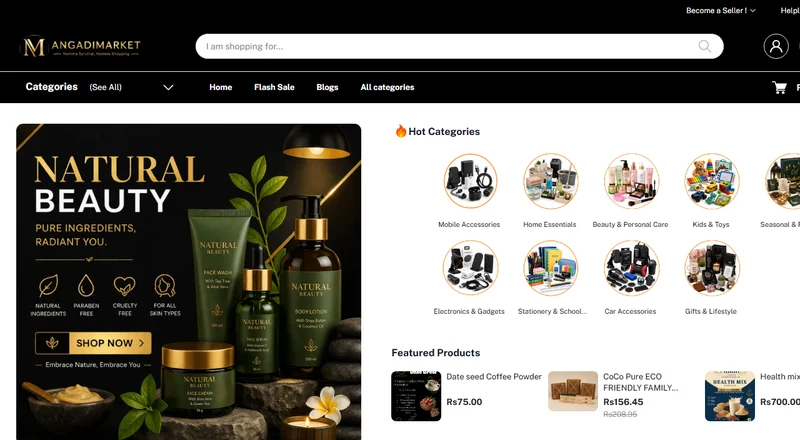
Angadi Market

Sri Rakhi Interiors

MSJ Jewellers

Grow Value Properties

Infibee
What Our Clients Say
Real stories from business owners who partnered with us for growth.
"AS Enterprises rebuilt our interior design studio website in under 2 weeks. Our enquiries and customer calls doubled within a month of launching. Their local SEO optimization works wonders!"
"Working with AS Enterprises for our fashion store was the best business decision. They developed a fast Shopify store and set up our Meta Ads. Our online sales tripled in 60 days!"
"From brand consulting to launching our digital presence, they were professional, prompt, and result-oriented. Direct developer communication saved us weeks of email exchanges."
Official Partners
Platforms and payment gateways we build with and integrate for our clients.
 G
Google Partner
G
Google Partner
 CC
CCAvenue
CC
CCAvenue
 S
Shiprocket
S
Shiprocket
 🛒
Shopify Partners
🛒
Shopify Partners
 R
Rediff
R
Rediff
 Z
Zoho
Z
Zoho
 ₹
Razorpay
₹
Razorpay
 P
PayU
P
PayU
 💬
tawk.to
💬
tawk.to
Ready to Rank Higher on Google?
AS Enterprises helps Chennai businesses turn strategy into results. Get a free, no-obligation consultation.