For the vast majority of Chennai businesses — clinics, salons, showrooms, restaurants, contractors, professional firms — local SEO is the single highest-return marketing channel there is. It puts you in front of nearby customers at the exact moment they’re searching for what you offer, ready to call or visit. This complete guide explains how local SEO works and exactly how to win in Google Maps, the local pack and “near me” searches.
What Local SEO Is
Local SEO is the practice of optimising your online presence to attract customers from local searches — the ones with local intent, like “dentist near me,” “web designer in Adyar” or “best biryani T Nagar.” It focuses on ranking in Google Maps, the “local pack” of businesses shown for local queries, and localised organic results. While it overlaps with general SEO, local SEO has its own critical elements — above all, your Google Business Profile and reviews.
Why Local SEO Is the Best Channel
Local searches carry extraordinary intent: someone searching “emergency electrician near me” wants to hire, now. Ranking for these searches delivers customers who are ready to act, at no cost per click. Local SEO also shows results faster than general SEO — often within weeks — and levels the field, letting a small local business outrank bigger competitors who neglect it. For any business that serves customers in a specific area, this is where the best return on effort lives.
The Google Local Pack Explained
The “local pack” is the box of three businesses with a map that appears at the top of results for local searches. Ranking here is prime real estate — it sits above the normal organic results and captures a huge share of clicks and calls. Google decides who appears based mainly on three factors: relevance (how well you match the search), distance (proximity to the searcher), and prominence (how well-known and well-reviewed you are). Local SEO is essentially the work of improving all three.
Google Business Profile: Your Foundation
Your Google Business Profile (GBP) is the single most important element of local SEO — often more important than your website for local searches. A fully optimised profile can generate calls, direction requests and visits directly. Optimising it means claiming and verifying it, completing every field, choosing accurate primary and secondary categories, adding plenty of real photos, listing your services with descriptions, keeping hours accurate, and posting regular updates. An incomplete or neglected profile is the most common reason local businesses underperform. Our step-by-step Google Business Profile optimization guide covers the whole process.
Reviews: Your Biggest Lever
Reviews are the highest-impact factor most local businesses can influence. Their quantity, quality, recency and your responses all affect both your local rankings and whether customers choose you over a competitor. The strategy is simple but requires consistency: actively ask every happy customer for a Google review, make it easy with a direct link, and reply to every review — positive and negative — professionally. A steady stream of genuine, recent reviews compounds into a powerful competitive advantage that’s hard for rivals to copy quickly.
NAP Consistency & Citations
NAP stands for Name, Address and Phone number, and consistency matters more than most businesses realise. Your NAP must be identical everywhere it appears online — your website, Google Business Profile, social profiles and directory listings. Inconsistencies (different phone formats, old addresses) confuse Google and weaken your local rankings. Citations — listings in trusted directories like Justdial, Sulekha, IndiaMART and local chambers — reinforce your prominence and legitimacy when they carry consistent NAP details. Auditing and cleaning up your citations is foundational local SEO work.
Local On-Page SEO
Your website should reinforce your local relevance. That means including your city and areas served naturally in titles, headings and content; adding LocalBusiness schema markup so Google clearly understands your location and details; embedding a Google Map on your contact page; and making your NAP prominent and consistent. These on-page signals work together with your Google Business Profile to strengthen your local presence across both Maps and organic results.
Location Pages
If you serve multiple areas, dedicated location pages — a distinct, genuinely useful page for each area — help you rank in each neighbourhood rather than only where you’re based. Each page should offer real, area-specific value rather than thin duplicated content. This is exactly the strategy behind our own location pages across Chennai, from OMR to Anna Nagar — each written for that area’s specific businesses and needs. For multi-area service businesses, well-built location pages are one of the most effective local SEO tactics available.
Local Content & Keywords
Creating locally relevant content strengthens your area authority and captures more local searches. This includes targeting local keywords (area names plus your service), writing about local topics, events or guides relevant to your community, and answering the specific questions local customers ask. Local content signals to Google that you’re genuinely part of and relevant to the area, and it captures long-tail local searches that competitors ignore. Even a handful of genuinely useful local pages can meaningfully lift your visibility.
Local Links & Partnerships
Links from other local, relevant websites boost your prominence in Google’s eyes. Effective sources include local business directories, chambers of commerce and trade associations, local news and community sites, sponsorships of local events or organisations, and partnerships with complementary local businesses. These local links are especially valuable for local SEO because they reinforce your connection to the area. Building a handful of genuine, relevant local links over time steadily strengthens your local authority.
Tracking Local SEO
Measure what matters: your rankings in the local pack and Maps for key terms, the actions on your Google Business Profile (calls, direction requests, website clicks — all shown in GBP insights), reviews gained over time, and ultimately the enquiries and customers from local search. Google Business Profile’s own insights plus Google Search Console give you most of this for free. Tracking these tells you what’s working and where to focus next, keeping your local SEO effort pointed at real business results.
Common Local SEO Mistakes
- An incomplete Google Business Profile. The biggest and most common miss.
- Not collecting reviews. Neglecting your single biggest ranking lever.
- Inconsistent NAP. Confusing Google with mismatched details across the web.
- Ignoring “near me” and area keywords. Missing high-intent local searches.
- Thin or duplicated location pages. These can hurt rather than help.
- Not replying to reviews. Missing an easy trust and ranking signal.
Local SEO vs Regular SEO
Local SEO and regular (organic) SEO overlap but have different emphases, and understanding the difference helps you focus effort where it counts. Regular SEO is about ranking web pages in Google’s main results for any search, driven by content, technical health and backlinks. Local SEO adds a geographic layer, focusing on Google Maps, the local pack and “near me” searches, where your Google Business Profile, reviews, proximity and local signals matter most. For a business serving customers in a specific area, local SEO usually delivers faster, higher-intent results — while regular SEO builds broader reach over time. Most local businesses should prioritise local SEO first, then build wider organic authority using our complete SEO guide.
Photos & Posts on Your Profile
An active Google Business Profile outperforms a static one. Photos matter more than most businesses realise — profiles with plenty of quality images of your storefront, team, work and products get more views and actions, because they help customers trust and choose you. Adding fresh photos regularly signals an active, real business. Google Posts — short updates about offers, news or events that appear on your profile — keep your listing lively and give customers reasons to act. Treating your profile as a living, regularly-updated channel rather than a one-time listing steadily improves both its ranking and its conversion.
The Q&A & Messaging Features
Your Google Business Profile includes features many businesses ignore. The Q&A section lets anyone ask a question publicly — and anyone can answer, so it’s wise to seed it with the questions customers commonly ask and answer them yourself, ensuring accurate, helpful information appears. Messaging lets customers contact you directly from your profile; enabling it and responding promptly captures enquiries you’d otherwise miss. Both features improve engagement and give potential customers the answers they need to choose you. Actively managing them is a small effort that meaningfully improves how your profile converts browsers into customers.
Choosing the Right Categories
Your Google Business Profile categories tell Google what your business is and which searches to show you for, making them one of the most important ranking factors you control. Choose the most accurate primary category for your core business, then add relevant secondary categories for your other services. Being too vague or choosing the wrong primary category is a common mistake that limits visibility. It’s worth researching which categories your best-ranking local competitors use, and being as specific and accurate as possible — the right categories can significantly improve which local searches you appear for.
Multiple Locations & Service Areas
If you have more than one location, each needs its own Google Business Profile, optimised individually, plus its own location page on your website. If you serve customers at their location rather than yours (like a plumber or mobile service), you set up a service-area business, defining the areas you cover. Handling multiple locations or service areas correctly — with consistent details, individual optimisation and dedicated pages — lets you rank in each area you serve. Done poorly, with duplicated or thin information, it can hold you back. Our approach to area pages shows how to give each location genuine, distinct value.
Voice Search & Near Me
More people search by voice and use “near me” phrasing, and both heavily favour local businesses with strong profiles. Voice searches tend to be conversational and question-based (“where’s the nearest...”, “who does... near me”), and Google typically answers them using local business information and reviews. The good news is that optimising for voice and “near me” searches is the same work as good local SEO: a complete, accurate profile, strong reviews, clear information and content that answers real questions. Businesses that nail local SEO fundamentals are automatically well-positioned for these growing search behaviours.
Studying Local Competitors
Your local competitors’ profiles are a free lesson in what’s working in your area. Look at the businesses ranking in the local pack for your key terms: what categories they use, how many reviews they have and how recent, how complete their profiles are, what photos and posts they share, and what their websites do well. This reveals both the standard you need to match and the gaps you can exploit — often local competitors neglect reviews, posts or location content, leaving room for a more active business to overtake them. Turning these observations into a focused action plan is one of the fastest routes to local visibility.
A Review Generation System
Because reviews are so important, the businesses that win at local SEO build a simple, repeatable system for generating them rather than asking occasionally. That means making it a routine part of your process to ask every satisfied customer, giving them a direct review link (by WhatsApp, SMS or a QR code) to remove friction, choosing the right moment just after a positive experience, and always replying to reviews once they arrive. A steady, ongoing flow of genuine recent reviews — rather than a burst followed by silence — is what compounds into a lasting advantage. Never buy fake reviews; they violate Google’s policies and risk your profile.
Maintaining Your Local Presence
Local SEO isn’t a one-time setup — it needs ongoing attention to stay strong. That means keeping your profile information accurate (especially hours during festivals and holidays), adding fresh photos and posts, responding to reviews and questions promptly, monitoring for and correcting any incorrect information Google or users add, and keeping your citations consistent as details change. This ongoing maintenance keeps your profile active, accurate and competitive. Businesses that set up a great profile and then neglect it gradually lose ground to more active competitors, while those that maintain a living presence hold and grow their local visibility over time.
Local Schema Markup
Local schema markup is structured data that tells Google exactly who and where your business is — your name, address, phone, hours, area served and business type — in a machine-readable form. Adding LocalBusiness schema to your website helps Google understand and trust your location details, reinforcing the connection between your site and your Google Business Profile, and can support rich results. It’s one of the more technical parts of local SEO, but it’s high-value and often neglected by competitors, making it an easy edge. Every site we build includes the appropriate local schema by default. If your current website lacks it, adding accurate LocalBusiness (and where relevant, service and review) schema is a straightforward, worthwhile improvement that strengthens how clearly search engines understand your local relevance.
Building Citations Step by Step
Citations — mentions of your business name, address and phone on other websites — reinforce your legitimacy and prominence for local search. Building them is methodical work: start with the major Indian directories (Justdial, Sulekha, IndiaMART), add relevant industry-specific directories, include local chambers of commerce and trade associations, and ensure your details are on your social profiles. The golden rule throughout is exact NAP consistency — the same name, address and phone format everywhere — because inconsistencies confuse Google and dilute the benefit. It’s also worth auditing for old or incorrect citations and correcting them. Citations don’t need to number in the hundreds; a solid set of accurate, consistent listings on trusted, relevant directories does far more good than a scattering of low-quality ones. This foundational work steadily strengthens your local authority.
Handling Duplicate & Fake Listings
Duplicate or incorrect listings can quietly undermine your local SEO by splitting your signals and confusing customers. Sometimes multiple Google Business Profiles exist for the same business (created by mistake, or automatically), which should be identified and merged or removed so all your reviews and authority consolidate into one strong profile. Occasionally competitors or spammers create fake or misleading listings, or users suggest incorrect edits to your profile — all of which need monitoring and correcting. Keeping a single, accurate, authoritative profile with consistent information across the web is essential. Periodically searching for your business and checking that only correct listings appear, and that your profile information hasn’t been altered, protects the local presence you’ve built. Cleaning up duplicates alone can produce a noticeable ranking improvement.
Service-Area Business Local SEO
Many businesses serve customers at the customer’s location rather than their own — plumbers, electricians, cleaners, mobile services. Google supports these as service-area businesses, where you define the areas you cover instead of showing a storefront address. Local SEO for service-area businesses has its own nuances: setting your service areas accurately, creating genuinely useful pages for each key area you serve, gathering reviews that mention different locations, and building local relevance across your whole coverage area rather than a single point. Done well, this lets you appear for “near me” searches across all the areas you actually serve. The same fundamentals apply — complete profile, reviews, consistent NAP — but the geographic strategy is broader, aiming to establish relevance across a region rather than concentrating on one location.
Local Link-Building Tactics
Links from other local, relevant websites are among the strongest signals of local prominence, and building them is very achievable for a local business. Practical tactics include getting listed by local business associations and chambers, sponsoring local events, teams or charities (which often earn a link and goodwill), partnering with complementary local businesses for cross-promotion, contributing to local news or community blogs, and earning coverage for anything genuinely newsworthy your business does. Even a handful of authentic local links meaningfully strengthens your standing, because they confirm your real connection to the community. The emphasis should always be on genuine relevance and relationships rather than volume — a few links from respected local sources outweigh many from irrelevant ones, and they tend to bring real referral traffic too.
Seasonal Local SEO
Local search behaviour shifts with seasons and festivals, and businesses that adapt capture more of that demand. This means keeping your Google Business Profile hours accurate during festivals and holidays (nothing frustrates customers more than wrong hours), creating timely posts and offers around seasonal demand, adjusting your content and keywords for seasonal searches relevant to your business, and being especially responsive to reviews and enquiries during busy periods. For many Chennai businesses, festival and wedding seasons bring surges in local searches — being fully optimised, accurate and responsive during these windows converts that heightened intent into customers. A little seasonal preparation on your local presence, done ahead of each peak, ensures you make the most of the periods when local search activity and buying intent are at their highest.
Local SEO Tools
You don’t need expensive software to run effective local SEO. The most important tools are free and official: Google Business Profile itself, with its insights showing how customers find and act on your listing; Google Search Console for your website’s local search performance; and Google Maps to check how you appear and study competitors. Simple manual searches for your key terms reveal who’s ranking and why. These cover the essentials for most small businesses — monitoring your rankings, profile performance, reviews and competitors. Paid local SEO tools exist and add convenience for tracking rankings across many keywords or managing citations at scale, but they’re not necessary to start. Mastering the free official tools first gives you most of the insight you need to improve, at no cost.
Local SEO by Industry
While the fundamentals are universal, local SEO priorities shift by industry. A restaurant lives on photos, reviews and Google Maps prominence. A clinic or professional service depends heavily on trust signals, reviews and accurate service information. A retailer or showroom benefits from strong visuals, product information and directions. A home-service business needs service-area optimisation and reviews across its coverage area. Tailoring your local SEO to how your specific customers search and choose — rather than following a generic checklist — produces better results. Our industry guides, from the restaurant local SEO guide to the guide for doctors, show how different sectors should approach local search, and our industry pages reflect these differences in practice.
Local Ranking Factors Summarised
It helps to have the local ranking factors in one place. Google’s local rankings come down to three broad areas: relevance (how well your profile and website match the search — driven by accurate categories, complete information and relevant content), distance (how close you are to the searcher, which you can’t change but which makes serving your true area well important), and prominence (how established and trusted you are — driven above all by reviews, plus citations, links and overall online presence). Almost every local SEO tactic maps to improving one of these. Reviews and a complete, accurate Google Business Profile influence all three of the levers you can actually control, which is why they’re emphasised throughout this guide. Keeping this simple framework in mind helps you judge whether any activity is worth doing: if it doesn’t improve relevance or prominence, it probably isn’t a priority.
Your First 30 Days of Local SEO
A focused first month builds real momentum. In week one, claim and verify your Google Business Profile if you haven’t, and complete every field thoroughly. In week two, choose accurate categories, add plenty of quality photos, list your services, and add LocalBusiness schema and consistent NAP to your website. In week three, set up a simple system to request reviews from every happy customer and start asking, replying to any reviews that arrive. In week four, build your core citations on the major directories with consistent details, and publish or optimise a page or two of locally relevant content. By day 30 you’ll have a complete, active profile, the beginnings of a review flow, consistent citations and a locally-optimised website — the foundation that local rankings build on. From there, consistency in reviews, posts and maintenance compounds your visibility over the following months.
Common Questions About Google Maps
Businesses often ask how Google Maps ranking really works, and a few points clear up common confusion. You can’t pay Google to rank higher in the organic map results — position is earned through relevance, distance and prominence, not fees. Your ranking can vary depending on where the searcher is, so you may appear differently for users in different parts of the city. Being physically closer to a searcher helps, which is why serving and optimising for your true area matters. And reviews genuinely move the needle, so the effort of collecting them is well spent. Understanding that Maps ranking is earned and location-dependent — not bought or fixed — helps set realistic expectations and keeps your effort focused on the things that actually improve your standing: a complete profile, steady reviews and genuine local relevance.
Explore the full local SEO cluster
→ SEO Services → Local SEO Guide (Blog) → Google Business Profile Guide → Local SEO Checklist → Areas We Serve → All Complete GuidesFrequently Asked Questions
Real Projects. Real Results.
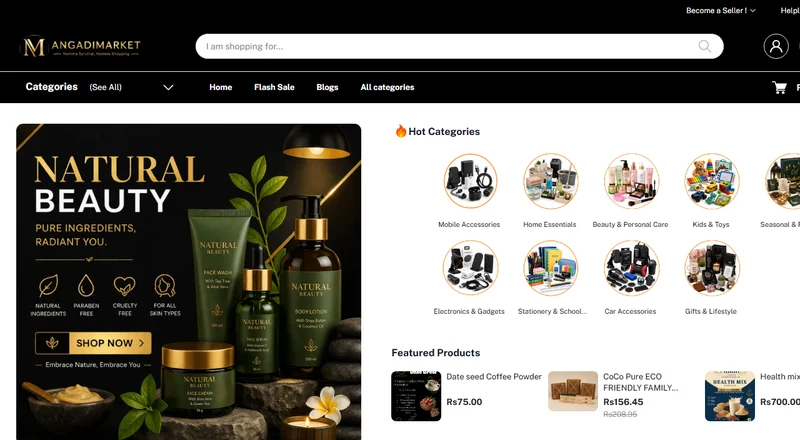
A selection of websites we have designed and built for businesses across Tamil Nadu.

Wood Crops
Angadi Market

Sri Rakhi Interiors

MSJ Jewellers

Grow Value Properties

Infibee
What Our Clients Say
Real stories from business owners who partnered with us for growth.
"AS Enterprises rebuilt our interior design studio website in under 2 weeks. Our enquiries and customer calls doubled within a month of launching. Their local SEO optimization works wonders!"
"Working with AS Enterprises for our fashion store was the best business decision. They developed a fast Shopify store and set up our Meta Ads. Our online sales tripled in 60 days!"
"From brand consulting to launching our digital presence, they were professional, prompt, and result-oriented. Direct developer communication saved us weeks of email exchanges."
Official Partners
Platforms and payment gateways we build with and integrate for our clients.
 G
Google Partner
G
Google Partner
 CC
CCAvenue
CC
CCAvenue
 S
Shiprocket
S
Shiprocket
 🛒
Shopify Partners
🛒
Shopify Partners
 R
Rediff
R
Rediff
 Z
Zoho
Z
Zoho
 ₹
Razorpay
₹
Razorpay
 P
PayU
P
PayU
 💬
tawk.to
💬
tawk.to
Ready to Dominate Local Search?
AS Enterprises helps Chennai businesses turn strategy into results. Get a free, no-obligation consultation.