Digital marketing is how modern businesses in Chennai find customers, build trust and grow — predictably and measurably. Unlike a hoarding or newspaper ad, digital marketing lets you reach exactly the right people, track every rupee spent, and improve based on real data. But “digital marketing” covers a lot of ground, and doing a bit of everything badly wastes money. This complete guide explains each channel in plain language, how they fit together, and how to build a strategy that actually generates enquiries and sales.
What Digital Marketing Really Is
Digital marketing is simply the practice of promoting your business through online channels — search engines, websites, social media, email and ads — to attract, engage and convert customers. What makes it powerful compared with traditional marketing is precision and measurability: you can target specific audiences, see exactly what each activity produces, and shift budget toward what works. For a Chennai business, that means marketing that pays its way rather than money spent on hope.
At its heart, digital marketing brings together several disciplines that each do a different job: getting found (SEO and ads), building an audience (social and content), and nurturing that audience into customers (email, WhatsApp and remarketing). Understanding how these pieces connect is the difference between scattered activity and a system that compounds.
Why It Matters for Chennai Businesses
Your customers are already online — searching Google, scrolling Instagram, watching YouTube and messaging on WhatsApp. Digital marketing meets them where they already are, at the moment they’re interested. It levels the field too: a small, focused Chennai business can outmarket a larger competitor by being smarter and more targeted, without a huge budget. And because everything is measurable, you learn what your customers actually respond to, which improves every future campaign.
Crucially, digital marketing builds assets you own — a website that ranks, an email list, an engaged social following — rather than renting attention indefinitely. Over time this reduces your cost per customer and makes growth more predictable.
The Core Digital Marketing Channels
Effective digital marketing usually combines several channels, each with a distinct role. The main ones are search engine optimization (SEO), paid advertising (Google and social ads), social media marketing, content marketing, and email or WhatsApp marketing. A well-built website sits at the centre, because almost every channel ultimately sends people there to convert. The sections below cover each in turn, and how to combine them.
SEO: Long-Term Free Traffic
Search engine optimization earns your business free, high-intent traffic by ranking on Google for the searches your customers make. It takes months to build but compounds into a durable asset that keeps delivering without paying per click. For most Chennai businesses, and especially local ones, SEO is the highest-ROI channel over time. It’s a deep topic in its own right — see our complete SEO guide and SEO services for the full picture.
Paid Ads: Instant Reach
Where SEO is slow and free, paid advertising is fast and paid. Google Ads puts you in front of people actively searching for what you offer; social ads on Meta (Facebook and Instagram) reach people based on interests and demographics. Paid ads deliver traffic and leads immediately, making them ideal for launches, promotions and testing — and for filling the gap while SEO builds. The key is disciplined targeting, conversion tracking and continual optimisation so you don’t waste budget. Explore our Google Ads and Meta Ads services, and the deeper Google Ads guide.
Social Media Marketing
Social media builds awareness, personality and trust for your brand, and keeps you visible to your audience between purchases. For visual businesses — restaurants, salons, boutiques, real estate — platforms like Instagram are especially powerful. Social works best as a consistent presence that showcases your work, shares helpful content, and engages your community, rather than sporadic sales posts. Combined with paid social ads, it becomes both a brand-builder and a lead source. Our digital marketing service includes social media management.
Content Marketing
Content marketing — helpful blogs, guides, videos and resources — attracts customers by answering their questions and building trust before they ever buy. It fuels SEO (every useful article is a chance to rank), gives you something valuable to share on social and email, and positions you as the expert. This very guide is content marketing in action. Done consistently, content compounds: each piece keeps working long after it’s published, bringing in visitors and building authority.
Email & WhatsApp Marketing
Email and WhatsApp let you reach people who’ve already shown interest, at almost no cost, which makes them among the highest-return channels. Use them to welcome new enquiries, nurture leads with helpful information, announce offers and news, and win back past customers. For Indian audiences, WhatsApp is particularly effective given its near-universal use and high open rates. Building and thoughtfully messaging a list turns one-time visitors into repeat customers — the cheapest growth there is.
Building a Marketing Funnel
The channels above work best not in isolation but as a funnel that moves strangers to customers. At the top, SEO, social and content build awareness and attract people. In the middle, your website, content and email nurture that interest and build trust. At the bottom, strong calls to action, remarketing and offers convert them into enquiries and sales. Thinking in terms of this journey — rather than isolated tactics — is what turns marketing spend into predictable growth. Every channel should have a clear role in moving people to the next stage.
Setting a Realistic Budget
How much to spend depends on your goals, margins and how quickly you want results. A sensible approach is to balance fast and slow channels: invest in SEO and content for durable long-term traffic, while using a controlled ad budget for immediate leads. Start with a budget you can sustain, measure the return, and scale what works. The worst approach is spreading a tiny budget thinly across every channel — it’s far better to do one or two channels well than everything poorly. As results come in, reinvest from what’s working into further growth.
Measuring What Works
The great advantage of digital marketing is measurability, so use it. Track the metrics that tie to business outcomes: enquiries and sales generated, cost per lead by channel, conversion rates, and return on ad spend. Free tools — Google Analytics, Search Console and each ad platform’s own reporting — give you most of what you need. The goal is to know which channels and campaigns actually produce customers, so you can confidently shift budget toward them and cut what doesn’t work.
Choosing the Right Mix for Your Business
There’s no universal formula — the right mix depends on your business. A local service business should lead with local SEO, Google Business Profile and Google Ads. An e-commerce store needs SEO, Google and Meta Ads, and email/WhatsApp for retention. A visual or lifestyle brand benefits heavily from Instagram and content. A B2B business often does best with SEO, targeted Google Ads and authoritative content. We help you choose the mix that fits your goals and budget rather than selling you everything.
Common Digital Marketing Mistakes
- No clear goal. Marketing without a defined objective wastes money.
- Spreading too thin. Doing every channel badly beats doing one or two well — in the wrong direction.
- Ignoring the website. Traffic is wasted if the site doesn’t convert.
- Not tracking results. Without measurement you can’t improve or justify spend.
- Impatience with SEO and content. Abandoning slow-but-compounding channels too early.
- Set-and-forget ads. Campaigns need ongoing optimisation to stay profitable.
Your Website: The Hub of It All
Every digital marketing channel ultimately sends people somewhere to take action, and that somewhere is almost always your website. This makes the website the hub of your entire marketing effort — if it’s slow, confusing or unpersuasive, every rupee you spend driving traffic to it is partly wasted. A fast, clear, conversion-focused website multiplies the return on all your other marketing. Before scaling any channel, it’s worth making sure your website is ready to convert the visitors you send it. Our complete website development guide covers exactly how to build one that turns traffic into enquiries, and our website development service can build or improve yours.
Video & YouTube Marketing
Video has become one of the most engaging and trusted content formats, and it’s increasingly central to digital marketing. Explainer videos, product demos, customer testimonials, behind-the-scenes clips and how-to content all build trust and reach people who prefer watching to reading. YouTube doubles as the world’s second-largest search engine, so well-optimised videos can rank and bring in viewers for years. Short-form video on Instagram and other platforms drives huge reach for visual businesses. You don’t need a studio — authentic, helpful videos shot well on a phone often outperform polished but empty production, and they give you content to reuse across every channel.
Remarketing & Retargeting
Most people don’t buy on their first visit — they browse, get distracted, and leave. Remarketing (also called retargeting) brings them back by showing your ads to people who’ve already visited your website or engaged with you. Because these people already know you, remarketing typically converts far better and costs less than reaching cold audiences. It’s one of the most cost-effective tactics in digital marketing, keeping your business front of mind through the consideration period until the person is ready to act. Setting up remarketing across Google and Meta is a high-return step once you have steady website traffic to work with.
Local Digital Marketing
For businesses serving a specific area, local digital marketing deserves special focus because it delivers the highest intent at the lowest cost. This means an optimised Google Business Profile, steady reviews, location-targeted ads, and locally relevant content and SEO. A customer searching for a service “near me” is ready to act now, so appearing prominently in local results converts exceptionally well. Local digital marketing is a discipline in itself — our complete local SEO guide covers the organic side in depth, and combining it with location-targeted ads gives both immediate and long-term local visibility.
Brand Building & Consistency
Beyond generating immediate leads, digital marketing builds your brand — the reputation and recognition that make future marketing cheaper and more effective. Consistency is what builds a brand: the same name, logo, colours, tone and quality across your website, social media, ads and every touchpoint. A consistent, professional brand signals reliability and makes you memorable, so that when a customer is finally ready to buy, they think of you first. Strong branding also lets you charge more and compete on value rather than price. Our branding services help build a consistent identity that strengthens every marketing channel.
Marketing Automation
As your marketing grows, automation lets you do more without proportionally more effort. Automated email and WhatsApp sequences welcome new enquiries, nurture leads with helpful information, follow up automatically, and win back lapsed customers — all running in the background. Automation ensures no lead falls through the cracks and that every prospect gets timely, relevant communication. Even simple automations, like an instant response to a new enquiry and a short follow-up sequence, noticeably improve conversion. Building these systems turns sporadic manual effort into a reliable machine that consistently moves prospects toward becoming customers.
AI & The Future of Digital Marketing
Digital marketing keeps evolving, and AI is accelerating that change — from AI-assisted content and ad optimisation to AI-powered chatbots and the rise of AI search answering questions directly. For a Chennai business, the practical takeaway isn’t to chase every new tool, but to build on fundamentals that endure: a fast, helpful website, genuinely useful content, strong local presence and real customer relationships. These serve you well regardless of how the technology shifts. Businesses that combine solid fundamentals with a willingness to adopt genuinely useful new tools — like an AI chatbot 🔌WP AI Chatbot Plugin to capture leads instantly — will stay ahead.
DIY vs Hiring an Agency
You can start much of your digital marketing yourself — setting up your Google Business Profile, posting on social media, and publishing helpful content using free guides. This is a great way to begin and understand your audience. But as you scale, the specialised skills, tools and consistent effort that effective marketing demands often make an agency worthwhile — both for expertise and for the time it frees you to run your business. The right choice depends on your budget, time and goals. Many businesses handle the basics in-house and bring in an agency for the channels that most reward expertise, like ads and SEO.
Building Your 90-Day Plan
Rather than trying everything at once, a focused 90-day plan builds momentum. Month 1: get the foundations right — ensure your website converts, set up analytics and your Google Business Profile, and start collecting reviews. Month 2: launch one or two channels well — typically local SEO plus a controlled Google Ads campaign for immediate leads — and begin publishing helpful content. Month 3: measure what’s working, double down on it, add remarketing, and build email/WhatsApp follow-up. By day 90 you’ll have a working system generating leads, with data showing where to invest next. This focused approach beats scattering a small budget across every channel at once.
Understanding the Customer Journey
Effective digital marketing starts with understanding how your customers actually move from first hearing about you to buying — and often to buying again. This journey typically runs through awareness (they discover a need or your business), consideration (they research and compare options), decision (they choose), and retention (they buy again and recommend you). Different channels serve different stages: social and content build awareness, your website and reviews support consideration, ads and clear calls to action drive the decision, and email or WhatsApp nurture retention. When you map your marketing to this journey, you stop thinking in disconnected tactics and start building a system where each piece moves people toward the next stage. Gaps in the journey — a great ad leading to a weak website, or a sale with no follow-up — are where most businesses quietly lose customers. Understanding your specific customers’ journey lets you fix those gaps and invest where it matters most.
Content Calendar & Consistency
The single biggest difference between marketing that works and marketing that fizzles is consistency, and a content calendar is how you achieve it. Rather than posting and publishing sporadically when you remember, a simple calendar plans what you’ll share and when — blog posts, social updates, emails, offers and seasonal campaigns — across the weeks ahead. This keeps your business consistently visible, spreads the workload so it’s sustainable, and ensures your messaging supports your goals rather than being random. It doesn’t need to be elaborate; even a basic monthly plan of a few posts, one useful article and a couple of emails, executed reliably, beats bursts of activity followed by silence. Consistency compounds — audiences grow, SEO builds, and your brand becomes familiar — while inconsistency resets your progress each time. Planning ahead also lets you prepare for busy seasons and launches calmly rather than scrambling.
Online Reputation Management
In a connected market like Chennai, your online reputation travels ahead of you. Before choosing a business, people read reviews, check ratings and form an impression from your online presence — so managing that reputation is a core part of digital marketing. This means actively collecting genuine reviews, responding professionally to all feedback (especially negative reviews, which are an opportunity to show you care), monitoring what’s said about you, and maintaining a consistent, professional presence everywhere customers might look. A strong reputation lowers the cost of every other marketing effort, because trust is already established when a prospect arrives. A neglected or poor reputation, conversely, undermines even excellent advertising. Building a steady flow of positive reviews and handling criticism gracefully turns your reputation into a genuine competitive advantage that’s difficult for competitors to replicate.
Digital Marketing on a Small Budget
You don’t need a large budget to market effectively — you need focus. On a small budget, the highest-return activities are usually free or low-cost: fully optimising your Google Business Profile, actively collecting reviews, publishing genuinely helpful content that builds SEO over time, staying active on the one social platform where your customers are, and running a small, tightly-targeted ad campaign on your highest-intent keywords. The mistake that wastes small budgets is spreading them across every channel at once, achieving nothing meaningful anywhere. Concentrating a modest budget on one or two channels done well produces real results you can then reinvest to grow. Many successful Chennai businesses started exactly this way — strong local SEO and a focused ad campaign — before expanding. Small budgets reward discipline, measurement and patience far more than they reward trying to do everything.
Influencer & Partnership Marketing
Partnering with others who already have your audience’s trust can be a highly cost-effective way to grow. Local influencers — not necessarily huge accounts, but genuine voices your customers follow — can introduce your business to engaged local audiences authentically. Partnerships with complementary businesses (a photographer and a venue, a gym and a nutritionist) let you reach each other’s customers and even share marketing costs. These approaches work because they borrow existing trust rather than building it from scratch, which is faster and often cheaper than advertising to strangers. The key is genuine relevance and authenticity — audiences quickly sense forced or mismatched promotions. Thoughtful local partnerships and honest influencer collaboration can deliver strong returns, especially for businesses whose customers value personal recommendation, which describes much of the Chennai market.
Seasonal & Festival Campaigns
Indian commerce follows a strong seasonal rhythm — Diwali, Pongal, wedding season, New Year and more — and businesses that plan campaigns around these peaks capture significant extra demand. Because buying intent surges during festivals, these are the ideal moments to run offers, launch products and increase ad spend, as well as the best time to acquire new customers you can keep year-round. Effective seasonal marketing means planning ahead: preparing offers, creative and inventory in advance, warming up your audience before the peak, and being ready to respond as demand rises. A simple annual calendar of the seasons and festivals that matter to your business turns predictable demand into planned, profitable campaigns rather than missed opportunities. The businesses that win these windows are those that prepare weeks ahead, not the ones scrambling at the last minute.
Setting Up Analytics Properly
You can’t improve marketing you can’t measure, so proper analytics is foundational rather than optional. At minimum, set up Google Analytics to understand your traffic and what visitors do, Google Search Console to see your organic search performance, and conversion tracking so you know how many visitors actually enquire, call or buy — and which channels produce them. For businesses running ads, each platform’s conversion tracking ties spend to results. The point isn’t to drown in data but to answer a few crucial questions: where do my customers come from, what does each channel cost per lead, and what should I do more or less of. Setting this up before scaling any spend means your decisions are guided by evidence rather than guesswork, which is the difference between marketing that improves over time and marketing that repeats the same expensive mistakes.
The KPIs That Actually Matter
It’s easy to get distracted by vanity metrics — follower counts, likes, raw page views — that feel good but don’t pay the bills. The KPIs that actually matter tie directly to business outcomes: leads and enquiries generated, cost per lead by channel, conversion rate, customer acquisition cost, and ultimately revenue and return on your marketing investment. A social post with thousands of likes but no enquiries is less valuable than a quiet channel that reliably produces customers. Focusing on outcome metrics keeps your marketing honest and pointed at growth. It also changes decisions: you invest more in channels with a low cost per customer and a high return, and cut or fix those that don’t deliver, regardless of how impressive their vanity numbers look. Measuring what matters is what turns marketing from an expense into an investment.
Getting Started: A Practical Checklist
If you’re starting from scratch, a simple checklist keeps you focused on what matters rather than chasing every shiny tactic. First, make sure your website is fast, clear and built to convert — it’s the hub everything points to. Second, claim and fully optimise your Google Business Profile, and start collecting reviews immediately. Third, set up analytics and conversion tracking so you can measure results from day one. Fourth, choose one or two channels to focus on based on where your customers are — usually local SEO plus a small, targeted ad campaign for most Chennai businesses. Fifth, commit to consistency with a simple content and posting plan. Working through this foundational checklist before spreading into more channels gives you a solid base that every later effort builds on, and avoids the common trap of doing a little of everything and seeing results from none of it.
When & How to Scale Your Marketing
Once you have a channel or two producing leads profitably, scaling means growing what works rather than constantly starting new experiments. The signal to scale is clear data: a channel with a healthy cost per lead and good return can usually absorb more budget while staying profitable, at least up to a point. Scale by increasing investment in proven channels, expanding into closely related opportunities (more keywords, more content, more areas), and adding complementary channels that support the customer journey — like remarketing to warm audiences or email to nurture leads. Throughout, keep measuring, because returns can shift as you grow. The disciplined approach — prove a channel, then scale it, then add the next — builds marketing that grows sustainably and profitably, rather than a scattered set of activities that never quite compound. Growing steadily on evidence beats gambling on unproven bets.
Explore the full digital marketing cluster
→ Digital Marketing Service → Complete SEO Guide → Complete Google Ads Guide → Google Ads vs Meta Ads → Organic SEO vs Paid Ads → All Complete GuidesFrequently Asked Questions
Real Projects. Real Results.
A selection of websites we have designed and built for businesses across Tamil Nadu.

Wood Crops
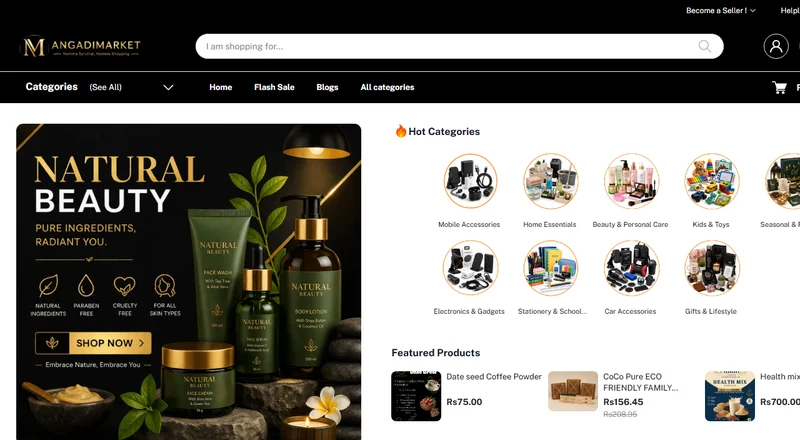
Angadi Market

Sri Rakhi Interiors

MSJ Jewellers

Grow Value Properties

Infibee
What Our Clients Say
Real stories from business owners who partnered with us for growth.
"AS Enterprises rebuilt our interior design studio website in under 2 weeks. Our enquiries and customer calls doubled within a month of launching. Their local SEO optimization works wonders!"
"Working with AS Enterprises for our fashion store was the best business decision. They developed a fast Shopify store and set up our Meta Ads. Our online sales tripled in 60 days!"
"From brand consulting to launching our digital presence, they were professional, prompt, and result-oriented. Direct developer communication saved us weeks of email exchanges."
Official Partners
Platforms and payment gateways we build with and integrate for our clients.
 G
Google Partner
G
Google Partner
 CC
CCAvenue
CC
CCAvenue
 S
Shiprocket
S
Shiprocket
 🛒
Shopify Partners
🛒
Shopify Partners
 R
Rediff
R
Rediff
 Z
Zoho
Z
Zoho
 ₹
Razorpay
₹
Razorpay
 P
PayU
P
PayU
 💬
tawk.to
💬
tawk.to
Ready to Grow With Digital Marketing?
AS Enterprises helps Chennai businesses turn strategy into results. Get a free, no-obligation consultation.