A website is the hardest-working asset your business will ever own. It sells while you sleep, answers questions before customers call, builds credibility before you ever meet a prospect, and decides — in about three seconds — whether a stranger becomes a lead or clicks away to a competitor. Yet most business websites underperform badly, not because the owner chose the wrong colour or font, but because the site was never built with a clear commercial purpose in mind.
This complete guide is written for Chennai business owners who want to get website development right. It covers everything that matters in 2026: what website development actually involves, what separates a site that generates enquiries from one that just sits there, how much a website really costs, how to choose a partner you can trust, and how to keep your site fast, secure and effective long after launch. Whether you are building your first website or replacing one that has let you down, this guide will help you make confident, informed decisions.
What Website Development Really Means
“Website development” is used loosely, but it brings together three connected disciplines, and understanding the difference helps you brief a developer properly and judge the results.
Design is how the site looks and feels — the layout, colours, typography, imagery and the overall experience of moving through the pages. Good design is not decoration; it guides attention, builds trust and makes the next step obvious. Development is the engineering that makes everything work — the code, the content management system, the forms, the integrations with tools like WhatsApp or a payment gateway, and the performance that keeps pages loading fast. Content is the words, images, structure and messaging that persuade visitors and help search engines understand and rank your pages.
A website that looks stunning but loads slowly will lose visitors before they see it. One that works flawlessly but says nothing persuasive will fail to convert. And a site full of great copy that no one can find on Google generates no traffic to convert in the first place. Great website development balances all three as a single system aimed at one outcome: turning visitors into enquiries and customers. When we build a site at AS Enterprises, design, development and content are never treated as separate silos — they are planned together from day one.
If the technical terms in this guide are unfamiliar, our plain-English web development glossary and web design glossary define them all, so you never have to nod along to jargon you don’t understand.
Why Your Chennai Business Needs a Professional Website
Chennai’s market is fiercely competitive across almost every sector, and buyer behaviour has changed permanently. Before anyone hires a service, visits a showroom or places an order, they search online — and they judge. Whether someone is looking for a dentist in Adyar, a manufacturer in Ambattur, a wedding photographer in T Nagar or a coaching centre in Anna Nagar, their first move is a Google search followed by a quick scan of the websites that appear. If you don’t show up, or show up with a weak, outdated site, you quietly lose that customer to a competitor who invested in their online presence.
A professional website delivers four things that a social media page, a marketplace listing or a directory entry simply cannot:
- Credibility. A polished, professional site signals that you are an established, serious business worth trusting with money. A cheap or broken site signals the opposite, however good your actual work is.
- Control. You own the platform, the design, the messaging and the customer relationship — unlike a social platform or marketplace that can change its rules, bury your reach or charge rising commissions overnight.
- Discoverability. A well-built website can rank on Google for the exact searches your customers make, bringing a steady stream of people who are already looking for what you offer.
- Conversion. A purpose-built site is designed to turn visitors into leads with clear calls to action, easy contact options and persuasive content — something no generic listing is built to do.
The temptation to save money with the cheapest possible option is understandable, but it usually backfires. A site that fails to generate leads costs you far more in lost business than the money you saved. We explain exactly how this plays out in our breakdown of why cheap websites cost you more later.
What Actually Makes a Website Convert
Traffic is worthless if it doesn’t turn into enquiries. Conversion — the percentage of visitors who take a desired action — is where most websites quietly fail. Here is what separates a site that converts from one that doesn’t.
Clarity within seconds. A visitor should understand what you do, who you do it for and why they should care within the first few seconds and without scrolling. Vague slogans and clever wordplay lose people; clear, specific value wins them.
A single, obvious next step on every page. Every page should guide the visitor toward one clear action — call, WhatsApp, enquire, buy. When you ask visitors to do everything, they do nothing. Strong calls to action, repeated naturally through the page, dramatically lift enquiries.
Trust signals. Testimonials, reviews, client logos, case studies, certifications, real photos and clear contact details all reassure a cautious visitor. People buy from businesses they trust, and trust has to be earned on the page. This is exactly why we add a visible trust strip and real case studies to the sites we build.
Friction removal. Every extra form field, every confusing menu, every slow-loading page is friction that costs you conversions. The easiest path from interest to enquiry wins. Click-to-call and click-to-WhatsApp buttons matter enormously for Chennai audiences who often prefer to message rather than fill a long form.
Mobile-first everything. The majority of your visitors are on phones, frequently on mobile data. If the mobile experience is cramped, slow or fiddly, your conversion rate collapses regardless of how good the desktop version looks.
Types of Websites You Can Build
Not every business needs the same kind of website, and matching the type to your goal saves money and improves results. The main types are:
- Business / brochure websites. These present your services, build trust and capture enquiries. They suit the majority of local service businesses — clinics, consultants, agencies, contractors and more. See our website development service.
- E-commerce stores. These sell products online with cart, payments, inventory and order management. Explore our dedicated e-commerce development and the full e-commerce guide.
- Landing pages. Single, focused pages built to convert advertising traffic toward one goal. Learn exactly when to use one in our landing page vs full website comparison, and see our landing page design service.
- Web applications. Custom tools, dashboards, booking systems and portals that go beyond a standard site. Explore our web app development.
- Portfolio & catalog sites. Sites that showcase work or products, common for interior designers, jewellers, photographers and manufacturers who need to display rather than transact online.
Still deciding on structure? Our comparisons on single-page vs multi-page and static vs CMS websites walk you through the trade-offs in plain language.
The Website Development Process, Step by Step
A good agency follows a clear, repeatable process rather than making it up as they go. Knowing the stages helps you spot a professional partner and understand where your involvement matters most.
- Discovery. We learn your goals, audience, competitors, services and the exact actions you want visitors to take. This is the foundation everything else is built on. Our free website requirements template helps you prepare a clear brief, and if you are comparing agencies formally, our website RFP template keeps the comparison fair.
- Planning & structure. We map the pages, navigation and content around the keywords and questions your customers actually search, so the site is built for both people and search engines from the start.
- Design. We design the look and feel, mobile-first, and get your sign-off before a line of production code is written — so there are no expensive surprises later.
- Development. We build the site to be fast, responsive and reliable, wiring up every form, integration and interactive element.
- Content & SEO. We write and optimise the content, add structured data (schema), set up analytics and make sure every page targets the right search terms. Our content writing checklist keeps every page sharp.
- Quality assurance & launch. We test everything against a thorough pre-launch QA checklist and a website launch checklist — across browsers and devices — before going live.
- Support & growth. Launch is the beginning. We maintain, monitor and steadily improve the site so it keeps performing.
How Much a Website Costs in Chennai
Website costs in Chennai vary widely, because “a website” can mean anything from a single templated page to a complex custom platform. Here are realistic 2026 ranges to anchor your expectations:
| Website Type | Typical Cost |
|---|---|
| Basic 5-page business site | ₹15,000 – ₹25,000 |
| Custom business website | ₹30,000 – ₹75,000 |
| E-commerce store | ₹40,000 – ₹2,50,000+ |
| Custom web application | ₹1,00,000+ |
The final price depends on the number of pages, whether the design is custom or templated, the integrations required, the depth of SEO setup, and whether ongoing support is included. Some agencies quote a low headline figure and then charge for essentials — hosting, revisions, SEO, support — that should have been clear from the start. For a full, honest breakdown, read how much a website costs in Chennai in 2026 and the hidden website costs agencies don’t tell you about. You can also see exactly what we charge on our transparent pricing page.
It is also worth understanding what drives cost so you can prioritise. Custom design costs more than a template but converts better and makes you distinctive. Integrations like booking systems or payment gateways add development time. Quality content and proper SEO setup take effort but determine whether anyone ever finds the site. Our comparison of a template vs custom website explains where spending more genuinely pays off.
How to Choose a Web Development Company
Choosing the right partner matters more than any single technical decision, because a good partner will guide every technical decision for you. Look for the following:
- A portfolio of real, live websites you can visit and evaluate — not just screenshots.
- Clear, written pricing and a defined scope, so you know exactly what you are paying for.
- A structured process like the one above, rather than a vague promise to “build you a site.”
- Genuine local reviews and references you can check.
- Straight answers on who owns the site and code, what happens after launch, and how they approach SEO.
We have written detailed, practical guides to help you evaluate any agency — including us — objectively: how to choose a website company in Chennai, the exact questions to ask a web developer, the red flags of a bad web agency, and a portfolio checklist to run before hiring. If you are weighing your options structurally, our comparisons on freelancer vs agency, in-house vs agency and offshore vs local lay out the real trade-offs. And because promises made before a project often fade after launch, read our honest take on the reality of after-launch support.
Platforms & Technology Choices
The platform you build on shapes cost, flexibility, performance and how easily you can maintain the site yourself. There is no single “best” platform — only the best fit for your needs.
- WordPress is flexible, content-friendly and powers a huge share of the web. It is ideal for content-rich business sites and blogs where you want to update pages yourself. See our WordPress development.
- Shopify is purpose-built for online stores and is the fastest route to a reliable, low-maintenance shop. See Shopify development.
- Custom-coded sites give maximum speed and control for specific requirements, and suit web applications and performance-critical projects.
Not sure which fits? Our comparisons make the decision straightforward: WordPress vs Shopify, custom website vs WordPress, Wix vs WordPress, Squarespace vs WordPress and WordPress vs Webflow. If you plan to build it yourself, weigh up a website builder vs a web developer honestly first.
Design Principles That Win Trust
Design is often treated as taste, but effective website design follows principles that reliably build trust and drive action. A clean, uncluttered layout with generous white space feels professional and keeps attention on what matters. A clear visual hierarchy — where size, colour and position guide the eye — makes the most important message and the main call to action impossible to miss. Consistent branding across colours, fonts and imagery reinforces your identity and signals reliability.
Good design also respects how people actually read online: they scan rather than read word by word, so short paragraphs, descriptive headings, bullet points and meaningful images all help. And because a significant share of visitors have some form of impairment, designing for accessibility — sufficient colour contrast, readable text, keyboard navigation and descriptive alt text — widens your audience and helps SEO at the same time. Our website accessibility checklist covers the essentials, and our UI/UX design service brings these principles together.
Content That Sells
Content is where most websites are won or lost, yet it is often the most neglected part of a project. Persuasive content speaks to the customer’s problem before it talks about your features. It answers the real questions people have, uses their language rather than industry jargon, and backs claims with proof. Every page should have a clear job and a clear next step.
Strong website content also supports SEO, because search engines reward pages that genuinely answer what people are searching for. That means mapping one primary topic to each page, covering it thoroughly, and structuring it with clear headings. This very guide is an example: a comprehensive pillar page that links out to focused supporting articles, building topical authority. Use our content writing checklist to keep every page focused and persuasive, and if writing isn’t your strength, content creation is part of what we deliver.
Building for SEO From Day One
A website that isn’t built for search is a brochure that no one finds. SEO should be designed in from the very start, not bolted on months later at extra cost. That means fast performance, mobile-first design, a clean and logical structure, pages mapped to real keywords, descriptive metadata and schema markup that helps Google understand your content.
The fundamentals every new site needs are worth understanding even at a high level: responsive design, strong page speed, HTTPS security, healthy Core Web Vitals, and solid on-page SEO. For local businesses, appearing in Google Maps and “near me” searches is often the single biggest opportunity — our local SEO guide shows how. For the complete picture, see our dedicated SEO guide, our SEO services, and the practical SEO checklist for 2026.
Performance, Security & Compliance
Three technical foundations quietly determine whether a website succeeds. Performance — how fast pages load — affects rankings, conversions and how professional your business feels. A delay of a couple of seconds can lose you half your visitors. Our website speed optimization service targets exactly this, and our speed checklist shows what’s involved.
Security protects your site and your customers. At minimum every site needs an SSL certificate (HTTPS), strong passwords, regular software updates and reliable backups. Most hacks hit neglected sites through preventable gaps — our website security checklist lists the essentials. Compliance means clear privacy and data handling, correct GST setup for stores, and accessibility considerations. Getting these right at build time avoids painful and costly fixes later.
Common Mistakes to Avoid
- Choosing on price alone. The cheapest site frequently costs the most in lost leads and rebuilds.
- Ignoring mobile. Most Chennai visitors are on phones; a poor mobile experience sinks results.
- No clear call to action. If every page doesn’t guide visitors to enquire, buy or call, the traffic is wasted.
- Skipping SEO. A beautiful site no one can find generates nothing.
- Weak or missing content. Thin, vague pages neither persuade people nor rank on Google.
- No maintenance plan. Unmaintained sites get slow, break and get hacked over time.
- Not owning your assets. Always confirm you own your domain, hosting and site before you pay.
Timeline: What to Expect
A common question is how long a website takes. For a standard business website, one to three weeks is typical once content and requirements are ready. Larger custom sites and e-commerce stores take longer, from several weeks to a couple of months, depending on the number of pages, custom features and how quickly content, images and feedback are provided.
The single biggest cause of delay is not development speed but content readiness and slow approvals. Projects move fastest when the brief is clear from the start, decisions are made promptly, and content is prepared early. This is exactly why we start with discovery and a requirements template — a clear plan up front means a faster, smoother build and a better result.
Launch, Maintenance & Growth
Launching your website is the start of the journey, not the finish line. A live website needs ongoing care to stay fast, secure and effective: software updates, regular backups, security monitoring, broken-link checks and content refreshes. Neglected sites gradually slow down, break and become vulnerable to hacks — and a hacked or broken site can undo years of reputation in days.
Our website maintenance & support plans handle all of this for you, and our maintenance checklist shows exactly what monthly upkeep involves. Beyond maintenance, a website should grow — new pages, fresh content, ongoing SEO and conversion improvements compound over time. If your current site is aging or underperforming, a website redesign often delivers more than endless patching; just follow our redesign checklist to protect the rankings you already have.
Website Development Across Chennai
We build websites for businesses in every part of the city, and we understand that a jewellery showroom in T Nagar, an IT startup on OMR and a manufacturer in Ambattur each need a very different approach. Explore area-specific pages for OMR, Anna Nagar, T Nagar, Velachery, Adyar, Porur, Guindy and every other area we serve across Chennai. Wherever you are in the city, you get a local team you can actually meet and reach.
Websites Built Around Your Industry
The best websites are shaped by how a specific industry’s customers search, evaluate and buy. A hospital needs online appointment booking and strong trust signals; a manufacturer needs detailed capability pages and RFQ forms; a restaurant needs a beautiful menu and easy reservations. We build industry-specific sites across healthcare, real estate, education, restaurants, manufacturing and many more industries. Each of those pages links to a detailed industry guide covering exactly what that sector’s website needs.
Integrations That Add Value
A modern website rarely works alone — it connects to the tools that run your business. The right integrations turn a static brochure into a working system that saves time and captures more leads. Common, high-value integrations include WhatsApp click-to-chat (essential for Chennai audiences who prefer messaging), Google Maps for location, a payment gateway for stores or deposits, a booking or appointment system for clinics and services, a CRM to capture and follow up leads automatically, live chat or an AI chatbot to answer questions instantly, and email marketing tools to nurture enquiries into customers.
Each integration should earn its place by either capturing more leads or saving you work — not added just because it exists. We advise on the integrations that genuinely move the needle for your specific business, and can add advanced options like a custom AI chatbot 🔌WP AI Chatbot Plugin or a CRM/ERP system when they fit. The goal is a website that doesn’t just look good but actively works as part of your sales and operations.
Analytics: Measuring Website Success
You can’t improve what you don’t measure, and a website without analytics is flying blind. From day one, every site we build includes proper measurement so you know what’s working. The essentials are Google Analytics to see how many people visit, where they come from and what they do, Google Search Console to see which searches bring you traffic and flag technical issues, and conversion tracking so you know how many visitors actually enquire, call or buy.
The metrics that matter for a business website aren’t vanity numbers like raw page views. They are the ones tied to revenue: how many enquiries the site generates, the conversion rate (the percentage of visitors who take action), which pages and traffic sources produce leads, and the cost per lead compared with your other channels. Reviewing these regularly reveals exactly where to improve — a page that gets traffic but no enquiries needs a stronger call to action; a service that people search for but you don’t rank for is a content opportunity. Treating your website as a measurable, improvable asset — rather than a one-time project — is what separates sites that quietly grow a business from those that just sit there.
Ownership, Handover & What You Should Receive
One of the most overlooked parts of a website project is what you actually own and receive at the end — and it’s where some businesses get trapped. Before you pay anyone, confirm in writing that you will own your domain name (registered in your name, not the developer’s), your hosting account, the website files and content, and full administrator access to the site and any CMS. Too many business owners discover, when they want to make a change or switch providers, that their “own” website is locked inside an account they don’t control.
A professional handover should include admin logins for the website, hosting and domain; access to analytics and Search Console; any documentation or training you need to make basic updates; and clarity on what ongoing support covers. At AS Enterprises you own everything, and we hand it over cleanly — because your website is your asset, not ours to hold hostage. If you’re ever unsure what to ask for, our questions to ask a web developer covers ownership in detail.
Why Mobile-First Is Non-Negotiable
It’s worth stating plainly because it’s so often underestimated: for the overwhelming majority of Chennai businesses, most website visitors arrive on a phone, frequently over mobile data and often while on the move. This single fact should shape every decision about your website. Mobile-first design means designing for the small screen first and expanding to larger screens, rather than shrinking a desktop layout down and hoping it works.
Google reinforces this by using the mobile version of your site to determine rankings — so a weak mobile experience hurts you even in desktop searches. Practically, mobile-first means fast loading on mobile networks, tap targets big enough for thumbs, text readable without zooming, forms short enough to complete on a phone, and click-to-call and WhatsApp buttons always within reach. A site that delivers a great mobile experience simply converts more of the visitors you already have, which is why we build every site mobile-first as standard. For the full picture, see our guide on mobile-first design.
Explore the full website development cluster
→ Website Development Service (Chennai) → Transparent Pricing → How Much a Website Costs in Chennai → How to Choose a Website Company → All Platform & Approach Comparisons → Free Checklists & Templates → All Complete GuidesFrequently Asked Questions
Real Projects. Real Results.
A selection of websites we have designed and built for businesses across Tamil Nadu.
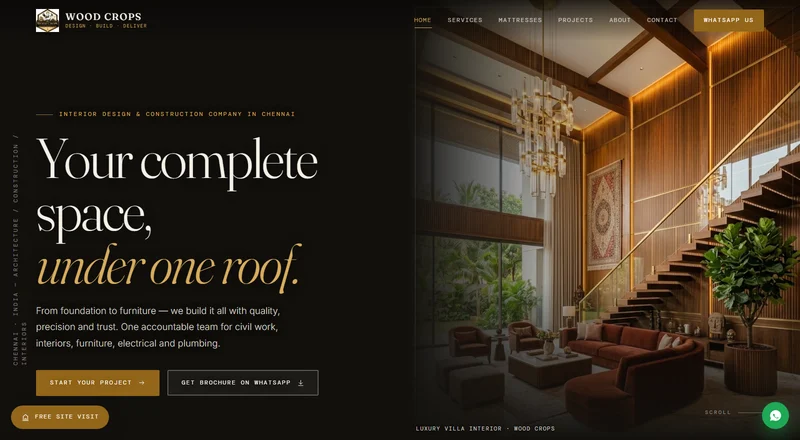
Wood Crops
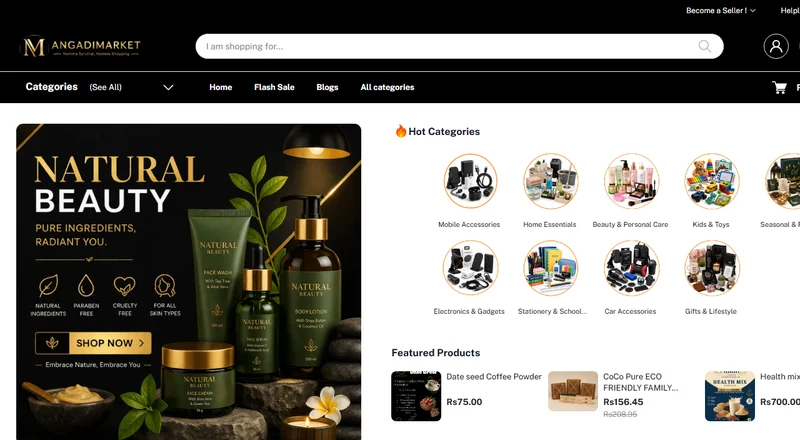
Angadi Market

Sri Rakhi Interiors

MSJ Jewellers

Grow Value Properties

Infibee
What Our Clients Say
Real stories from business owners who partnered with us for growth.
"AS Enterprises rebuilt our interior design studio website in under 2 weeks. Our enquiries and customer calls doubled within a month of launching. Their local SEO optimization works wonders!"
"Working with AS Enterprises for our fashion store was the best business decision. They developed a fast Shopify store and set up our Meta Ads. Our online sales tripled in 60 days!"
"From brand consulting to launching our digital presence, they were professional, prompt, and result-oriented. Direct developer communication saved us weeks of email exchanges."
Official Partners
Platforms and payment gateways we build with and integrate for our clients.
 G
Google Partner
G
Google Partner
 CC
CCAvenue
CC
CCAvenue
 S
Shiprocket
S
Shiprocket
 🛒
Shopify Partners
🛒
Shopify Partners
 R
Rediff
R
Rediff
 Z
Zoho
Z
Zoho
 ₹
Razorpay
₹
Razorpay
 P
PayU
P
PayU
 💬
tawk.to
💬
tawk.to
Ready to Build a Website That Generates Business?
AS Enterprises helps Chennai businesses turn strategy into results. Get a free, no-obligation consultation.