Meta Ads - advertising across Facebook, Instagram, Messenger and WhatsApp - put your business in front of the largest daily audience in India. Where Google Ads capture people already searching, Meta Ads create demand: they introduce your business to people who did not know they needed you yet, with targeting precise enough to make that introduction profitable. Done well, Meta Ads deliver leads and sales at remarkable efficiency; done carelessly, they burn budget on likes that never become customers. This complete guide covers how the platform really works, how to build campaigns that produce enquiries rather than vanity metrics, and the mistakes that separate profitable accounts from expensive ones.
What Meta Ads Are & How They Work
Meta Ads are paid placements across Meta's family of apps - Facebook, Instagram, Messenger and the Audience Network - all managed from one platform, Meta Ads Manager. You define an objective (awareness, traffic, leads, sales), an audience, a budget and creative; Meta's auction then decides which ads appear to which people, balancing your bid against how relevant and engaging your ad is predicted to be.
The crucial mental model: Meta is an interruption channel. People are scrolling to be entertained or connected, not searching for your service. Your ad must earn attention first, then interest, then action - which is why creative quality and offer strength matter more here than anywhere else in digital marketing. The platform's superpower is its data: Meta knows demographics, interests and behaviours at extraordinary depth, letting a Chennai jeweller reach engaged couples, or a gym reach fitness-interested locals within 5km, at scale no other channel matches.
Why Meta Ads Work for Chennai Businesses
India is Meta's largest market, and Chennai's customers spend serious daily time on Instagram and Facebook across every age band - Instagram skewing younger, Facebook holding the 30+ audience strongly. For local businesses this means your exact customers are reachable, repeatedly and affordably.
Meta Ads earn their place in a Chennai marketing mix for four reasons. Demand creation: they generate interest for products people weren't searching for - fashion, food, events, offers. Visual selling: photo and video ads let visually-driven businesses (restaurants, boutiques, real estate, salons) sell the experience. Precision local reach: radius and area targeting focuses spend on the neighbourhoods you actually serve. Low entry cost: meaningful testing starts around Rs.10,000-20,000/month, with cost-per-thousand-impressions typically Rs.50-250 in Chennai - far cheaper reach than print or hoardings, and measurable to the rupee.
Meta Ads vs Google Ads
The two platforms answer different marketing questions and work best together.
| Factor | Google Ads | Meta Ads |
|---|---|---|
| User intent | Actively searching - high intent | Browsing - intent created by the ad |
| Best for | Capturing existing demand | Creating demand, awareness, offers |
| Targeting basis | Keywords | People: demographics, interests, behaviour |
| Creative | Text-led | Visual-led - image and video |
| Typical CPC | Higher | Lower |
| Conversion speed | Fast - buyer-ready traffic | Often multi-touch - nurture helps |
The practical rule: urgent, searched-for services (repairs, clinics, B2B) lean Google; visual, impulse and lifestyle purchases lean Meta; most growth plans run both, with remarketing knitting them together. See the full comparison in Google Ads vs Meta Ads and our complete Google Ads guide.
Campaign Objectives Explained
Every Meta campaign starts by choosing an objective, and this choice tells the algorithm what to optimise for - so choosing wrong quietly wrecks results. The objectives that matter for most businesses:
- Sales / Conversions: optimises for purchases or lead events on your website. The right choice once your pixel has data - Meta hunts for people likely to convert, not just click.
- Leads: optimises for lead form fills, calls or WhatsApp conversations - the workhorse for service businesses.
- Engagement / Traffic: cheap clicks and interactions - useful for warming audiences, dangerous as a main strategy because clickers are not buyers.
- Awareness: maximum reach for brand-building - best for launches and festival pushes with follow-up planned.
Targeting: Audiences That Convert
Meta's targeting stack has three tiers, and understanding them is the difference between spraying money and investing it.
Core audiences combine location (Chennai, specific areas, or a radius), age, gender and interests. Useful for cold reach, but modern Meta often performs best with broader settings, letting the algorithm find buyers from wide pools using your conversion data as the compass.
Custom audiences are people who already know you: website visitors (via the pixel), customer lists, Instagram/Facebook engagers, video viewers. These are your warmest, cheapest conversions and the raw material for remarketing - never run an account without them.
Lookalike audiences ask Meta to find new people who resemble your best existing customers - typically the most effective cold-audience tool available. A 1% lookalike of your buyer list usually outperforms any interest stack you could hand-pick.
The modern playbook: broad-but-sensible cold targeting powered by strong creative and clean conversion signals, custom audiences for remarketing, lookalikes to scale. Micro-slicing audiences into tiny segments mostly starves the algorithm of data. Our deeper dive: Meta Ads targeting guide.
Creative: The Real Performance Lever
On Meta, creative is targeting. The algorithm shows your ad to more people, more cheaply, when people engage with it - so a scroll-stopping ad literally lowers your costs. Most account performance gaps trace to creative, not settings.
What works consistently for Chennai businesses: real over polished - authentic phone-shot video of actual work outperforms glossy stock; hook in the first second - movement, a face, a bold claim before the scroll continues; show the outcome - the transformed room, the finished website, the plated dish; native format - vertical video for Reels/Stories, designed sound-off with text overlays; one clear message per ad with a visible offer and call-to-action.
Volume matters too: launch 3-5 creative variations, let the auction pick winners, kill losers weekly, and refresh before fatigue sets in (rising frequency + falling results = your audience has seen it too often). Creative testing is a rhythm, not a one-time task.
Ad Formats & Placements
Meta offers several formats, each with natural strengths:
- Single image: simplest to produce; strong for offers and announcements.
- Video / Reels: the reach and engagement king in 2026 - short vertical video earns the cheapest attention on the platform.
- Carousel: multiple cards - ideal for product ranges, before/afters, step-by-step stories.
- Collection / catalog ads: for e-commerce, showing shoppable product grids pulled from your feed - essential for stores, pairing with your e-commerce setup.
On placements, Advantage+ (automatic) placements usually win: Meta shifts your budget across Facebook Feed, Instagram Feed, Reels and Stories to wherever your results are cheapest. Manual placement control is worth it only with clear data showing a placement fails for you.
The Pixel & Conversion Tracking
The Meta Pixel (plus the Conversions API for reliability) is a small piece of code on your website that reports what visitors do - enquiries, purchases, WhatsApp clicks. It is the nervous system of profitable Meta advertising, for three reasons: it lets the algorithm optimise toward real conversions instead of clicks; it builds your website custom audiences for remarketing; and it makes results measurable so you know your true cost per lead.
Running Meta Ads without conversion tracking is driving blindfolded - you will optimise toward whatever is easiest to get (cheap clicks from non-buyers) rather than what makes money. Set up the pixel, define your conversion events, and verify they fire before scaling spend. This is non-negotiable plumbing, and it is part of every account we set up.
Click-to-WhatsApp & Lead Ads
Two lead formats deserve special attention for Indian audiences.
Click-to-WhatsApp ads open a WhatsApp chat with your business the moment someone taps the ad - no form, no landing page, no friction. For Chennai audiences who live on WhatsApp, this is routinely the lowest cost-per-conversation lead format available. The catch: conversations need fast, capable replies to become customers, so pair these ads with disciplined response (our 2-hour promise exists for a reason) or an AI chatbot that qualifies instantly.
Lead ads open a pre-filled form inside Facebook/Instagram - name and phone captured in two taps. Volume is excellent and cost is low; quality runs slightly softer than website leads, so speed-to-call matters (leads called within 5 minutes convert several times better than leads called next day). Both formats can feed your CRM automatically. More on the WhatsApp side: WhatsApp marketing guide.
Budgets, Bidding & Costs
Meta spends whatever you allow - you set daily or lifetime budgets per campaign. Realistic Chennai framing: Rs.10,000-20,000/month tests meaningfully for a local business; Rs.20,000-60,000/month is the growth zone for most; e-commerce scaling goes higher as returns prove out. Typical CPMs run Rs.50-250, with lead costs anywhere from Rs.30 for click-to-WhatsApp conversations to Rs.500+ for high-value service enquiries - your offer and creative move these more than any setting.
On bidding, the default (lowest cost) serves most accounts well; cost-cap bidding becomes useful once you know your profitable cost per lead and want the algorithm to respect it. The discipline that matters more than bid strategy: judge everything by cost per lead and cost per customer, never by likes, reach or even clicks. Our framework: measuring ad ROI properly, and current cost benchmarks in Meta Ads cost in Chennai.
Building a Full-Funnel Strategy
One-shot ads to cold audiences leave most of the value on the table, because most people need several touches before buying. A full-funnel Meta strategy works three layers:
- Top - attract (cold): Reels and engaging video to broad/lookalike audiences build awareness cheaply and fill your retargeting pools.
- Middle - warm (engaged): remarket to video viewers, page engagers and site visitors with proof - testimonials, case studies, offers - moving interest toward decision.
- Bottom - convert (hot): direct-response ads (lead forms, click-to-WhatsApp, product ads with offers) to your warmest slices: pricing-page visitors, cart abandoners, repeat engagers.
Because warm audiences convert at a fraction of cold costs, this structure steadily lowers your blended cost per customer as the pools grow. It also survives creative fatigue better - each layer has its own job and message. Remarketing fundamentals: remarketing explained.
Reading Results & Optimising
Weekly optimisation is what keeps an account profitable. The numbers worth reading: cost per result (lead/purchase) against your target; CTR (weak click-through = creative or audience problem); frequency (above ~3-4 on cold audiences signals fatigue); and conversion rate after the click (good clicks but no leads = landing page or offer problem, not an ads problem - see landing pages for ads).
The optimisation rhythm: give new ads 3-7 days of learning before judging; kill clear losers, scale winners by 20-30% steps (sudden budget jumps reset learning); refresh creative on fatigue; and review placement/audience breakdowns monthly for waste. Resist daily knob-twiddling - the algorithm needs stable conditions to learn, and most "optimisation" that happens daily is noise chasing.
Festival & Seasonal Campaigns
Meta Ads shine brightest around India's buying seasons - Pongal, Akshaya Tritiya, Aadi offers, Navaratri-Diwali, wedding season - when intent surges and visual offer-led ads convert exceptionally. Two realities to plan around: costs rise into festivals as advertiser budgets flood the auction, and audiences warm in advance. The winning pattern is building awareness and retargeting pools 3-4 weeks early at cheap pre-festival rates, then converting those warmed audiences during the peak while competitors overpay for cold reach. Full seasonal playbook: festival marketing calendar.
Costly Meta Ads Mistakes
- Boosting posts as a strategy. The Boost button optimises for engagement, not customers - Ads Manager with a proper objective wins.
- No pixel / conversion tracking. The algorithm optimises blind and so do you.
- Wrong objective. Traffic campaigns produce clicks, not customers.
- One ad, never refreshed. Fatigue quietly doubles your costs.
- Micro-audiences. Tiny segments starve learning; broader + good creative wins.
- Judging by likes. Engagement is not revenue - cost per lead is the score.
- Slow follow-up. Leads decay in hours; WhatsApp/lead-ad enquiries need same-hour response.
DIY vs Professional Management
You can absolutely start yourself: Ads Manager is free, and a small click-to-WhatsApp campaign with honest creative teaches you the platform. The gap professional management closes is the compounding layer - correct pixel and event setup, full-funnel structure, systematic creative testing, weekly data-driven optimisation, and scaling without resetting learning. Since fees typically pay for themselves through lower cost per lead, the practical rule: DIY while spend is small and lessons are cheap; bring in management as budget grows and each percentage of efficiency is worth real money. Our Meta Ads management runs strategy, creative direction, tracking and optimisation end to end, reported on cost per lead - not likes.
Advantage+ & Meta's AI Features
Meta has steadily automated its platform under the Advantage+ banner, and knowing when to embrace the automation - and when to keep control - is a modern skill in itself. Advantage+ placements (letting Meta distribute your ads across Feed, Reels, Stories and more) are almost always worth enabling; the algorithm reliably finds cheaper delivery than manual placement picking. Advantage+ audience treats your targeting as a suggestion and expands beyond it when it predicts conversions - powerful once your pixel has solid data, less reliable for brand-new accounts with no signal history. Advantage+ shopping campaigns compress e-commerce account structure into one heavily-automated campaign and can perform excellently for stores with good catalogs and clean purchase tracking.
The honest framework: automation amplifies your data quality. With accurate conversion events and enough volume, Advantage+ features usually beat manual control. With sparse or broken tracking, they amplify noise. This is one more reason the pixel work described earlier is the real foundation of the account - every AI feature downstream depends on it. Start with automation on placements, adopt audience expansion once conversions flow, and keep judging by cost per result rather than by how clever the automation sounds.
Catalog Ads for E-Commerce
For online stores, catalog-powered ads are where Meta gets genuinely formidable. You upload a product feed (titles, images, prices, availability - the same discipline covered in our e-commerce guide), and Meta can then show every product as ad creative automatically. The killer application is dynamic remarketing: someone views a saree or a sofa on your store, leaves, and later sees that exact product - plus related ones - in their Instagram feed. These ads routinely deliver a store's best return on ad spend because the interest is proven and the creative is perfectly personalised, at zero incremental creative effort.
Catalog ads also serve cold prospecting: Meta picks products from your feed to match each viewer's predicted taste. For this to work well, feed hygiene matters - clear titles, quality images on clean backgrounds, accurate prices and stock. A store running Shopping ads on Google and catalog ads on Meta, both powered by the same well-maintained feed, covers the two biggest paid channels with compounding efficiency. If you run a store and are not running dynamic remarketing, this is usually the single highest-return campaign you are missing.
A Creative Production System
Because creative decides Meta performance, treating it as a repeatable production system - rather than an occasional scramble - is what sustains results month after month. A practical system for a Chennai business: batch monthly - one focused hour of shooting (finished work, behind-the-scenes, team, customer moments) yields a month of raw material; produce in variations - each concept cut as a Reel, a static image and a carousel, with two or three hook lines each; maintain a swipe file - save ads that stopped you scrolling as inspiration for formats and hooks; recycle winners - a proven ad concept can be refreshed with new footage rather than reinvented.
Structure each ad on a simple skeleton: hook (first 1-2 seconds - a question, bold claim or striking visual), proof (show the work, the result, the place), offer (what they get), action (what to do now). Test hooks more than anything else - the first two seconds decide most of an ad's fate. And keep captions tight: front-load the value, because only the first line shows before "more". None of this requires an agency-grade studio; it requires consistency, honest footage and the discipline to keep feeding the machine fresh material before fatigue sets in.
Policies & Avoiding Ad Rejections
Meta enforces ad policies algorithmically, and innocent businesses trip them regularly - so knowing the common triggers saves painful delays. Frequent culprits: personal attributes ("Are you overweight?" style copy that implies knowledge of the viewer - reframe to "Our fitness programs..."), unrealistic claims (guaranteed results, "#1" claims without substantiation), before/after imagery in health and beauty contexts, excessive text styling and clickbait framing, and restricted categories (finance, employment, housing) that carry special rules. Rejections are appealable and often overturned, but repeated violations damage account standing - and account bans, while usually recoverable, cost weeks.
Protective habits: keep copy about your service rather than the viewer's condition; substantiate claims or soften them; maintain a clean landing page that matches the ad (policy checks look at destinations too); and set up proper business verification in Meta Business Manager early, which strengthens your standing and unlocks features like WhatsApp API messaging. If an account inherits problems from past misuse, a clean-up pass - removing flagged ads, fixing the landing pages, appealing wrongful flags - restores health faster than starting over.
Your First 30 Days on Meta Ads
A focused first month builds the data foundation everything else compounds on. Week 1 - plumbing: install the pixel (plus Conversions API if feasible), define conversion events (lead, WhatsApp click, purchase), verify they fire, and set up Business Manager properly. Week 2 - warm start: launch a modest click-to-WhatsApp or lead campaign to a broad-but-local audience with 3-4 honest creative variations; simultaneously start an engagement-priced Reels campaign to begin filling retargeting pools. Week 3 - observe, don't fiddle: let learning run; check that leads are arriving and being answered fast; note which creative earns the clicks. Week 4 - first optimisation: kill clear creative losers, shift budget to winners, launch your first remarketing ad to the engaged pool, and review true cost per lead against what a customer is worth.
By day 30 you have working tracking, a proven creative direction or two, the beginnings of warm audiences, and a defensible read on unit economics - the platform stops being a slot machine and becomes a system you can scale deliberately. The most common first-month failure is impatience: judging ads in day two, restarting campaigns repeatedly, and never letting the algorithm accumulate the signal it needs.
Diagnosing Underperformance
When results disappoint, resist random changes - walk the funnel and find the stage that is actually broken. Low reach / high CPM: audience too narrow, budget too small for learning, or creative the auction predicts nobody wants - broaden and refresh. Reach but poor CTR: a creative problem - weak hook, unclear offer, or fatigue (check frequency; above ~3-4 on cold traffic, rotate). Clicks but no conversions: the ads are fine - the landing page, form length, load speed or offer is leaking (see landing pages for ads); for WhatsApp campaigns, slow replies are the classic silent killer. Conversions but bad quality: tighten targeting slightly, add qualifying friction (one extra form question), or adjust the offer that is attracting the wrong crowd. Everything worked, then decayed: almost always creative fatigue or seasonal auction pressure - refresh creative first, then reassess bids.
One discipline makes every diagnosis easier: change one variable at a time and give it days, not hours, to prove itself. Accounts that are "optimised" daily by gut feel never accumulate clean evidence about what actually works.
Meta Ads Playbooks by Industry
The fundamentals hold everywhere, but the winning emphasis shifts by business type. Restaurants & cafes: Reels of dishes and ambience to a tight radius, offer-led (weekday specials), click-to-WhatsApp or direction clicks as the goal - pair with the venue's virtual tour for standout creative. Retail & D2C stores: catalog ads plus dynamic remarketing as the core, creator-style Reels for prospecting, festival calendars driving offer waves. Real estate: lead ads with project brochures, walkthrough video creative, careful budget discipline given high lead values - speed-to-call decides everything. Clinics & wellness: trust-first creative (doctors, facility, testimonials within policy), lead forms for appointments, remarketing to site visitors. Education: parent-targeted campaigns in admission season, campus video, lead forms feeding fast counselling follow-up. B2B & services: Meta as the nurture layer - retargeting website visitors with case studies while Google Ads captures the searches.
The common thread: match the format to how that customer decides, and connect every campaign to a fast, human follow-up channel - in Chennai, that channel is usually WhatsApp.
Ads vs Organic Social: Using Both
A common confusion is treating organic posting and paid ads as the same activity. They are different engines: organic social builds relationship and proof with people who already follow you, while ads buy reach to people who do not. Organic reach for business pages is deliberately limited - even good posts reach a small slice of followers - so organic alone rarely grows a customer base, but it is far from useless: your profile is the first thing ad-clickers inspect, and a lively, credible feed converts sceptics that a bare profile loses.
The two work best braided together: post consistently so the profile validates you (the rhythm from our Instagram guide and 30 content ideas), then put paid budget behind the messages that must reach strangers - offers, launches, lead campaigns. Organic posts that perform unusually well are also your cheapest ad research: they have already proven the hook, so promoting them (properly, via Ads Manager with a real objective) starts from evidence rather than hope. Budgeting rule of thumb for small businesses: spend money on ads and spend consistency on organic - not the reverse.
Explore the full Meta Ads cluster
→ Meta Ads Management Service → Meta Ads Cost in Chennai → Meta Ads Targeting Guide → Facebook vs Instagram Ads → WhatsApp Marketing Guide → Google Ads vs Meta Ads → All Complete GuidesFrequently Asked Questions
Real Projects. Real Results.
A selection of websites we have designed and built for businesses across Tamil Nadu.
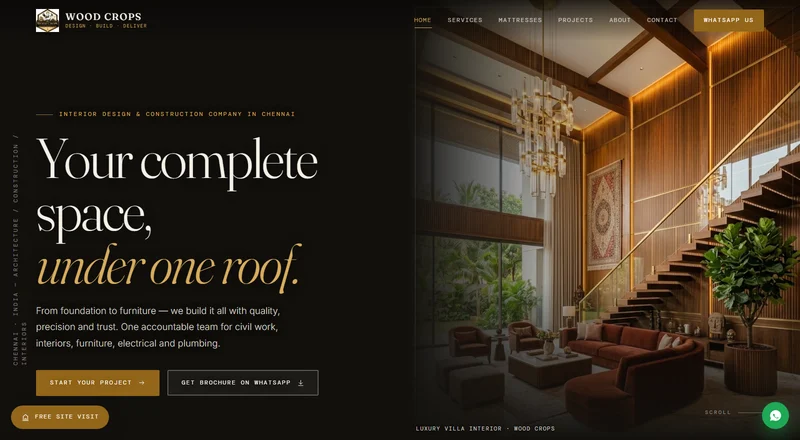
Wood Crops
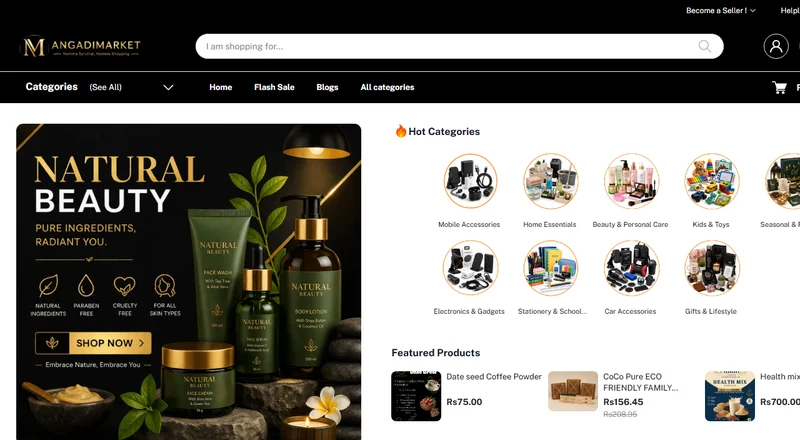
Angadi Market

Sri Rakhi Interiors

MSJ Jewellers

Grow Value Properties

Infibee
What Our Clients Say
Real stories from business owners who partnered with us for growth.
"AS Enterprises rebuilt our interior design studio website in under 2 weeks. Our enquiries and customer calls doubled within a month of launching. Their local SEO optimization works wonders!"
"Working with AS Enterprises for our fashion store was the best business decision. They developed a fast Shopify store and set up our Meta Ads. Our online sales tripled in 60 days!"
"From brand consulting to launching our digital presence, they were professional, prompt, and result-oriented. Direct developer communication saved us weeks of email exchanges."
Official Partners
Platforms and payment gateways we build with and integrate for our clients.
 G
Google Partner
G
Google Partner
 CC
CCAvenue
CC
CCAvenue
 S
Shiprocket
S
Shiprocket
 🛒
Shopify Partners
🛒
Shopify Partners
 R
Rediff
R
Rediff
 Z
Zoho
Z
Zoho
 ₹
Razorpay
₹
Razorpay
 P
PayU
P
PayU
 💬
tawk.to
💬
tawk.to
Ready to Get Leads From Meta Ads?
AS Enterprises helps Chennai businesses turn strategy into results. Get a free, no-obligation consultation.