A 360° virtual tour lets customers step inside your business from their phone - walking through your showroom, restaurant, school or property as if they were there. In a market where people research everything online before visiting, a virtual tour is the closest thing to a physical visit you can offer digitally, and it measurably increases the confidence that turns browsers into walk-ins, bookings and enquiries. This guide explains what virtual tours are, who they work best for, how they are made, and how to squeeze real marketing value from one.
What a 360 Virtual Tour Is
A 360° virtual tour is an interactive, navigable experience built from panoramic photographs of your space. Unlike a video (which plays one fixed path), a tour lets the viewer look in every direction and move between points themselves - into the next room, around the counter, up to the product display. Tours can live on your website, your Google Business Profile and Google Maps, and be shared anywhere a link works, including WhatsApp.
Modern tours can include interactive hotspots - clickable tags inside the tour that show product details, prices, menu items or booking links - turning a passive look-around into a guided, conversion-oriented experience. The result feels less like marketing and more like a genuine visit, which is precisely why it builds trust so effectively.
Why Virtual Tours Win Customers
Buying decisions are risk decisions, and a virtual tour removes the biggest unknown: what is this place actually like? Customers who can see your space before visiting arrive pre-sold - they have already judged the ambience, scale and professionalism and chosen you anyway.
- Trust through transparency: showing everything signals confidence; businesses that hide their space raise questions.
- Longer engagement: visitors exploring a tour spend multiples longer on your page than reading text - engagement that also feeds SEO signals.
- Pre-qualified footfall: people who toured virtually and still came are far more likely to buy - the tour filtered out mismatches for free.
- Distance selling: outstation students choosing colleges, NRIs evaluating property, corporates booking venues - tours close distance that photos cannot.
- Standing out: in most Chennai categories, few competitors offer tours - an immediate, visible differentiator on Maps and your site.
Virtual Tours & Google Business Profile
One of the highest-value placements for a tour is your Google Business Profile. Tours published to Google appear directly on your Maps listing - the "See inside" experience - exactly where local customers are already comparing you against competitors. A listing with a virtual tour is visibly richer than one with a few photos, and profiles with strong visual content consistently earn more direction requests, calls and website clicks.
This pairs naturally with everything else in local search: reviews, complete information and now an explorable interior make your listing the obvious choice in the local pack. If local visibility matters to your business - and for most Chennai businesses it is the single best channel - a tour is one of the few remaining upgrades competitors rarely have. See our complete local SEO guide for the full local playbook the tour slots into.
Who Benefits Most (By Industry)
Any business whose space influences the buying decision benefits, but some categories see outsized returns:
| Industry | What the tour sells |
|---|---|
| Restaurants & cafes | Ambience - the real product beyond the menu; diners choose atmospheres |
| Hotels & venues | Rooms, halls and facilities as they really are - direct bookings follow confidence |
| Real estate | Remote walk-throughs for buyers and NRIs; filters serious site visits |
| Schools & colleges | Campus, labs and classrooms for parents and outstation students |
| Showrooms & retail | Range and scale - jewellery, furniture, textiles, vehicles seen in context |
| Gyms, salons & clinics | Cleanliness, equipment and comfort - the anxieties that stop first visits |
| Wedding halls & event spaces | Capacity and look for families comparing venues across the city |
These map directly to the industries we build websites for - a tour typically slots into the same trust-building strategy as the site itself.
How a Virtual Tour Is Made
A professional tour is a straightforward, low-disruption project:
- Planning: we walk the space (physically or via a call) and map the capture points - which rooms, angles and pathways tell your story best.
- Preparation: the space is tidied and staged as you want customers to see it; good staging is half the result.
- Capture: panoramic photography at each point using 360° equipment - typically a few hours for most businesses, scheduled to avoid disrupting operations.
- Production: images are stitched, colour-corrected and linked into a navigable tour; hotspots, branding and any product tags are added.
- Publishing: the tour goes live on your website, your Google Business Profile/Maps listing, and as a shareable link for WhatsApp and social.
Most projects go from shoot to live within days. The main preparation on your side is simply presenting the space at its best on capture day.
Embedding Tours on Your Website
On your website, a tour earns its keep on the pages where doubt lives: the homepage (instant wow and differentiation), about/facility pages, and any page where customers evaluate the physical experience - rooms, halls, campus, showroom floors. Embedded well, it increases time-on-page dramatically and gives visitors a reason to stay and explore rather than bounce to a competitor.
Technical care matters: tours should lazy-load so they never slow the page's first paint (protecting your Core Web Vitals), work smoothly on mobile where most visitors are, and sit alongside clear calls-to-action - "Book a visit", "Reserve a table", WhatsApp - so the confidence the tour builds converts on the spot. We handle embedding as part of both tour projects and website builds.
Using Tours in Marketing & Ads
A tour is an asset, not just a page feature - and reusing it multiplies the return:
- WhatsApp sales: send the tour link to enquiries - letting a prospect walk through your venue mid-conversation closes distance instantly.
- Social content: screen-recorded fly-throughs of the tour make excellent Reels; stills become posts.
- Ads: tour-derived video makes distinctive Meta ad creative (see our Meta Ads guide), and landing pages with tours convert ad traffic better.
- Listings & OTAs: hotels and venues can reference tours across booking platforms for an edge.
- Proposals: venues, schools and B2B facilities include the link in quotes and brochures.
The pattern: you pay once for the capture, then the asset works across every channel where "seeing the place" would help close.
Cost & Return on Investment
Tour pricing scales with the size and complexity of the space and the number of capture points - a compact cafe is a smaller project than a multi-floor campus. As a one-time investment producing an asset used across Maps, website, WhatsApp and ads for years, the economics are favourable: if a tour tips even a handful of additional customers per month - one more table booked, one more admission enquiry, one more site visit - it typically pays for itself within weeks and keeps compounding.
The honest way to evaluate it: estimate the value of one converted customer in your business, then ask how many extra conversions per month a visibly richer Maps listing and a walk-through-able website would need to produce to break even. For most space-driven businesses the answer is "very few". Ask us for a quote for your specific space - we price transparently after understanding the scope.
What Separates Good Tours From Bad
Not all tours are equal, and a bad one can hurt more than help. Quality markers to insist on: sharp, well-lit, colour-true imagery (dim, distorted panoramas make great spaces look poor); logical navigation that flows the way a real visit would; smooth mobile performance, since that is where most viewers are; correct publishing to Google so the tour actually appears on your listing; and staging - the space captured clean, lit and ready, because the tour freezes that day forever.
Also worth planning: refresh the tour after renovations or major changes, exactly as you would update photos. An outdated tour showing an old layout undermines the very trust it is meant to build.
Common Concerns Answered
"Will people stop visiting if they can see everything online?" The evidence runs the other way: tours pre-sell visits. People who explore and still come are closer to buying; people who would have been disappointed were never your customers.
"My space is small - is it worth it?" Small, well-presented spaces often benefit most, because the tour proves quality and removes the uncertainty small venues suffer from. Scope (and price) scale down with size.
"Is a video walkthrough the same?" No - video shows one fixed path; a tour hands control to the viewer, which is what creates the feeling of a real visit. They complement each other: the tour is the asset, video fly-throughs are the promotion.
"How disruptive is the shoot?" Minimal - a few hours, schedulable around your quiet periods or before opening.
The Psychology of Seeing Inside
Why do tours convert so reliably? Because they answer the questions customers never ask out loud. Before visiting anywhere new, people carry quiet anxieties: Is it clean? Is it really as good as the photos? Will I feel out of place? Is it big enough / premium enough / safe enough? Photos - selected, cropped, flattering - never fully settle these doubts, because everyone knows photos are curated. A tour settles them, precisely because the viewer controls it: they choose where to look, which corner to inspect, which detail to zoom. Control creates credibility.
There is also an ownership effect: mentally walking through a space builds familiarity, and familiarity lowers the barrier to visiting. A family that has already "walked" your wedding hall arrives having imagined their function there; a parent who explored your labs has mentally enrolled their child. This is why tour viewers convert at higher rates and arrive further along the decision - the tour did the early persuasion silently, at scale, while you slept. In categories where every competitor shows the same polished photo set, being the one business that says "look at everything, yourself" is a trust move that marketing copy cannot imitate.
Tours vs Photos vs Video
These three visual formats are teammates with different jobs, not substitutes.
| Format | Viewer control | Best job | Weakness |
|---|---|---|---|
| Photos | None - curated frames | First impressions, listings, speed | Everyone knows they're selective |
| Video | None - fixed path | Storytelling, emotion, social reach | Passive; can't inspect freely |
| 360° tour | Full - explore anywhere | Trust, evaluation, "real visit" feel | Needs a click to engage |
The strongest setups use all three deliberately: photos for instant appeal on listings and social, video for reach and narrative (including fly-throughs cut from the tour), and the tour itself as the trust-closer for people seriously evaluating. If budget forces a choice, businesses whose space is the product - venues, hotels, campuses, showrooms - get more decision-stage value from the tour; businesses selling a service delivered elsewhere may prioritise video first. Most space-driven Chennai businesses eventually want the pair: tour for conversion, video for attention.
Shoot-Day Preparation Checklist
The tour permanently records how your space looked for a few hours on one day - so preparation is half the outcome. Before capture: deep-clean everything, including corners and glass a normal tidy skips, because 360° captures all of it; declutter ruthlessly - stray cartons, cables, staff bags and expired posters all photograph forever; switch on every light and replace dead bulbs - warm, fully-lit spaces read as premium; stage the experience - tables set, beds dressed, products faced, displays full; hide the private - documents, price workings, personal items, anything confidential; brief the team on timing so capture areas stay clear (tours generally photograph best without people mid-frame); and decide featured points - the hero angles and rooms your customers care about most, agreed with the photographer beforehand.
Two smaller details that pay off: fresh flowers or greenery read beautifully in panoramas, and signage/branding should be straightened and clean since viewers will zoom on it. Plan the shoot for your space's best natural-light window where relevant. An hour of preparation routinely makes the difference between a tour that flatters and one that merely documents.
Hotspots, Menus & Interactive Selling
Hotspots upgrade a tour from "look around" to "guided selling". These are clickable markers embedded in the scene that open information, images or links: a table hotspot opening the menu, a suite hotspot showing tariffs and a booking link, a machine hotspot listing specifications, a counter hotspot playing a welcome note from the owner. Used well, they let the tour answer buying questions exactly where they arise - which is far more persuasive than the same information sitting in a distant page section.
Practical patterns by business: restaurants - menu, signature-dish photos, reservation link at the host desk; hotels & venues - room tariffs, capacity details, enquiry buttons in each hall; showrooms - product details and "enquire on WhatsApp" tags on hero pieces; schools - department information and admission CTAs at each facility; clinics - service explanations and appointment links at relevant rooms. Restraint matters: a handful of purposeful hotspots guides; dozens of markers clutter the scene and dilute attention. Every tour we build maps hotspots to the actual questions your customers ask before buying - because that is the moment the tour should convert.
Measuring a Tour's Impact
A tour's value shows up in measurable places if you know where to look. On Google Business Profile: watch the insights trend after publishing - photo/tour views, direction requests, calls and website clicks typically lift as the listing becomes visibly richer than competitors'. On your website: compare time-on-page and bounce rate for tour-embedded pages before and after (engagement usually jumps sharply), and track clicks on the CTAs placed beside the tour. In conversations: the simplest and most telling metric - ask enquiries "did you see our virtual tour?" and note how often serious prospects say yes; businesses are consistently surprised how many pre-toured before contacting.
For attribution rigour, use a tagged link when sharing the tour on WhatsApp and social so those sessions are identifiable in analytics, and count tour-page assisted conversions in Google Analytics. The honest expectation: the tour is a conversion-rate and trust asset rather than a traffic source - its fingerprint is better-qualified enquiries, longer engagement and a Maps listing that outperforms its neighbours, compounding quietly month after month.
Tours + Website + Local SEO Together
A virtual tour multiplies the systems it plugs into, which is why it belongs inside a strategy rather than standing alone. The stack works like this: local SEO gets you found - complete profile, steady reviews, local relevance (the full playbook in our local SEO guide); the tour on your Maps listing then makes yours the listing people linger on and choose among the three in the local pack; your website receives that pre-warmed click and, with the tour embedded beside clear CTAs and trust signals, converts it (the conversion architecture from our website guide); and WhatsApp follow-up closes, often with the tour link re-shared mid-chat to seal venue-style decisions.
Each layer strengthens the others: the tour improves the listing's engagement signals, the engagement supports local rankings, the rankings deliver more viewers to the tour. For space-driven businesses this combined system - findable, explorable, contactable - is the whole local growth engine, and the tour is its most under-adopted component in Chennai today, which is exactly the opportunity.
VR, AI & Where Tours Are Heading
The direction of travel makes tours more valuable, not less. VR headsets keep spreading, and 360° tours are natively VR-ready - a property developer or venue can already offer immersive walkthroughs to remote buyers. AI search increasingly answers "best banquet halls in Chennai"-style questions by synthesising what it can verify about businesses; rich, structured visual evidence attached to your listing and site strengthens the footprint AI draws on (the same logic as our GEO guide). Interactive commerce is converging too - tours with shoppable hotspots blur into storefronts, and measurement/AR features increasingly let buyers check whether the sofa fits their hall from inside your showroom tour.
The practical takeaway is not to wait for the future but to note the asset's durability: a tour captured today serves the Maps listing now, the website now, WhatsApp sales now - and rides each new surface (VR, AI answers, richer Maps) as it arrives. Spaces change slowly; a well-made tour typically stays current for years, refreshed only after renovations.
Getting Started With Your Tour
If a tour makes sense for your business, the path is short. First, define the goal: more walk-ins from Maps, better-qualified venue enquiries, remote buyers for property, parent confidence for admissions - the goal shapes which spaces star and where hotspots point. Second, scope the space: rooms, floors and the pathway a real visit would take; this sets the capture plan and the quote. Third, schedule and prepare using the checklist above - a few hours of capture at your best-presented moment. Fourth, publish everywhere it works: Google Business Profile, embedded on the website's decision pages, and saved as the link your team shares in every relevant WhatsApp conversation. Finally, fold it into marketing - fly-through Reels, ad creative, proposal links - so the one-time capture keeps compounding.
We handle the entire chain - planning, capture, production, Google publishing, website embedding and the marketing hooks - as one project. See the 360° virtual tour service, or tell us about your space and we will scope it honestly, including whether a tour is genuinely the right next investment for your goals.
The Chennai Opportunity Right Now
Virtual tours sit in a rare strategic window in Chennai: customer behaviour is fully ready - everyone researches on Maps and expects to evaluate visually before visiting - while adoption among businesses remains thin outside big hotel chains and premium real estate. Search any local category - banquet halls, gyms, boutiques, schools - and count how many listings offer a "see inside" experience; in most categories it is nearly none. That gap is the opportunity: the trust advantage tours confer is largest precisely while competitors lack them, because differentiation, not just quality, drives choice in the local pack.
Windows like this close. As tours become standard - the way websites, then Google listings, then reviews each became baseline expectations - late adopters get no advantage from catching up, only parity. Early adopters, meanwhile, accumulate months or years of richer listings, stronger engagement signals and pre-sold customers. For a space-driven Chennai business weighing marketing investments this year, the calculus is straightforward: a one-time cost, an asset that works across every channel for years, and a differentiation dividend that is highest right now.
Virtual Tour Mistakes to Avoid
- Capturing an unprepared space. Clutter, dead bulbs and messy counters photograph forever - preparation is half the result.
- Cheap DIY panoramas. Distorted, dim or blurry tours actively harm trust; the format only works when the quality says "professional".
- Shooting but never publishing properly. A tour that never reaches your Google listing or website is an asset in a drawer - publishing is where the value lives.
- No calls-to-action around it. A tour builds intent; without booking/WhatsApp buttons beside it, that intent evaporates.
- Hotspot clutter. Dozens of markers overwhelm; a handful of purposeful ones sell.
- Letting it go stale. After renovations or major rearrangement, an outdated tour misleads - refresh it like you would your photos.
- Treating it as decoration. The businesses that profit share the link in every sales conversation and wire it into ads and proposals - the tour is a tool, not a trophy.
Explore the full virtual tour cluster
→ 360° Virtual Tour Service → Local SEO Guide (where tours amplify Maps) → Google Business Profile Optimization → Hotel Websites → Restaurant Websites → Education Websites → All Complete GuidesFrequently Asked Questions
Real Projects. Real Results.
A selection of websites we have designed and built for businesses across Tamil Nadu.
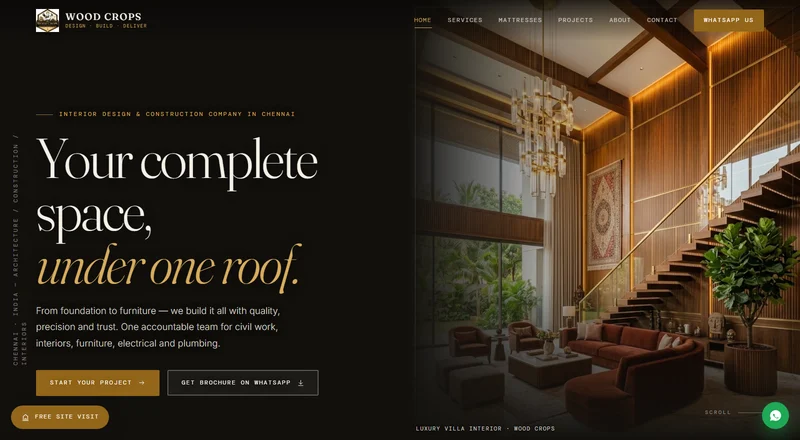
Wood Crops
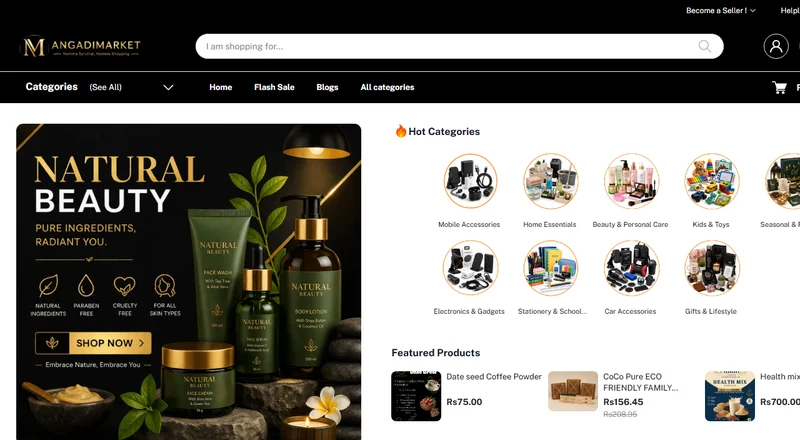
Angadi Market

Sri Rakhi Interiors

MSJ Jewellers

Grow Value Properties

Infibee
What Our Clients Say
Real stories from business owners who partnered with us for growth.
"AS Enterprises rebuilt our interior design studio website in under 2 weeks. Our enquiries and customer calls doubled within a month of launching. Their local SEO optimization works wonders!"
"Working with AS Enterprises for our fashion store was the best business decision. They developed a fast Shopify store and set up our Meta Ads. Our online sales tripled in 60 days!"
"From brand consulting to launching our digital presence, they were professional, prompt, and result-oriented. Direct developer communication saved us weeks of email exchanges."
Official Partners
Platforms and payment gateways we build with and integrate for our clients.
 G
Google Partner
G
Google Partner
 CC
CCAvenue
CC
CCAvenue
 S
Shiprocket
S
Shiprocket
 🛒
Shopify Partners
🛒
Shopify Partners
 R
Rediff
R
Rediff
 Z
Zoho
Z
Zoho
 ₹
Razorpay
₹
Razorpay
 P
PayU
P
PayU
 💬
tawk.to
💬
tawk.to
Ready to Let Customers Step Inside?
AS Enterprises helps Chennai businesses turn strategy into results. Get a free, no-obligation consultation.