Choosing who builds your website is one of the most consequential decisions you’ll make for your online presence — and one of the easiest to get wrong. The wrong choice leads to wasted money, missed deadlines, a site that doesn’t generate business, and often the expense of rebuilding with someone else. The right choice gives you a website that works, a partner you can rely on, and peace of mind. This complete guide walks you through exactly how to choose a web development company you can trust, what to look for, what to ask, and the warning signs to avoid.
Why Choosing Right Matters So Much
A website is a significant investment, and its quality depends almost entirely on who builds it. Two developers quoting similar prices can deliver wildly different results — one a fast, well-designed, lead-generating site you own and can grow, the other a slow, generic site that underperforms and traps you. Beyond the build itself, you’re choosing a relationship: someone who’ll support and maintain your site, respond when something breaks, and help you grow. Getting this decision right saves you money, time and stress, and it’s worth investing effort up front to choose well rather than rushing into the cheapest or most convenient option and regretting it later.
Your Options: Freelancer, Agency, In-House
You generally have three options, each with trade-offs. A freelancer can be affordable and flexible but is a single point of failure — limited capacity, and problems if they become unavailable. An agency offers a full team of specialists, a defined process and reliability, usually at a higher but fairer price. An in-house hire makes sense only if you have constant, ongoing web work to justify a salary. For most businesses, an agency offers the best balance of quality, reliability and value. Our comparisons of freelancer vs agency and in-house vs agency explore these trade-offs in detail.
Start by Defining What You Need
Before approaching anyone, get clear on what you actually need — it makes evaluating options far easier and quotes far more accurate. Think about your goals for the site, the pages and features you need, your design preferences, who provides content, your budget range and timeline, and whether you’ll need ongoing support. A clear brief helps developers understand your project and lets you compare their responses fairly. Our free website requirements template guides you through defining this, and if you’re comparing several companies formally, our website RFP template keeps the comparison consistent. Clarity up front prevents misunderstandings and mismatched expectations later.
Evaluating a Portfolio
A portfolio is the single best evidence of what a company can actually do, so study it carefully. Look at real, live websites you can visit — not just polished screenshots. Check whether the sites load fast, work well on mobile, look professional, and are the kind of quality you want. See whether they’ve built sites similar to yours or for your industry. Visit the live sites and judge them as a customer would. A strong, relevant portfolio of real working websites is reassuring; a thin portfolio, or only mockups with no live examples, is a warning. Our portfolio checklist gives you a structured way to evaluate any company’s work before you commit.
Questions You Must Ask
The right questions reveal a great deal about a company. Ask about their process, timelines, who’ll actually work on your project, and how they handle revisions. Ask what’s included in the price and what costs extra. Ask who owns the website, domain and code when it’s done. Ask how they approach mobile, speed and SEO. Ask what happens after launch — support, maintenance, and how to reach them. And ask for references or reviews you can check. How a company answers — clearly and confidently, or vaguely and evasively — tells you as much as the answers themselves. Our detailed guide to the questions to ask a web developer covers exactly what to ask and why.
Understanding Pricing & Quotes
Price matters, but the cheapest quote is rarely the best value — and understanding what’s behind a quote is essential. A very low price often means a templated site, no SEO, no support, or costs that appear later. A fair quote should clearly state what’s included: design, development, revisions, basic SEO, and what support (if any) comes after. Watch for vague quotes that leave essentials unstated, only to charge for them later. Compare quotes on what you actually get, not just the headline number. Our guides on website costs in Chennai and hidden website costs help you understand pricing, and our own transparent pricing page shows what fair, clear pricing looks like.
A Good Process Is a Green Flag
How a company works is as important as what they charge. A professional developer follows a clear, structured process — discovery, planning, design with your sign-off, development, testing and launch — rather than a vague promise to “build you a site.” A defined process means fewer surprises, better communication and a more predictable result. During your early conversations, a good company will ask thoughtful questions about your goals and audience rather than just talking about themselves, and will explain how they’ll approach your project. This professionalism at the start is a reliable signal of how the whole project will go. Our complete website development guide outlines what a proper process looks like.
Ownership, Access & Handover
One of the most important and overlooked issues is what you own and receive. Before paying, confirm in writing that you’ll own your domain (registered in your name), your hosting, your website files and content, and full administrator access. Some developers keep clients locked into accounts they control, making it hard to make changes or move to another provider. A trustworthy company hands over everything cleanly and is transparent about ownership from the start. Clarifying this before you commit protects you from a frustrating and expensive trap later. Your website is your asset, and you should own it fully — this is non-negotiable when choosing who builds it.
After-Launch Support
The relationship shouldn’t end at launch, yet after-launch support is where many developers disappear. Ask upfront what support is included, how you request changes, how quickly they respond, and what ongoing maintenance they offer. A website needs updates, backups, security and occasional fixes, so knowing who’ll handle these — and that they’ll be reachable — matters enormously. Beware companies that are attentive before the sale and unreachable after. Our honest look at the reality of after-launch support explains what to expect and ask for. A dependable long-term partner who supports your site after launch is worth far more than a slightly cheaper builder who vanishes.
Red Flags to Watch For
- No real portfolio of live websites you can visit.
- Prices that seem too good to be true — they usually are.
- Vague answers about process, ownership, or what’s included.
- Guarantees of instant SEO results or #1 rankings.
- Poor communication before the sale — it rarely improves after.
- Reluctance to give you ownership of your domain, site or code.
Our full guide to the red flags of a bad web agency covers these warning signs in depth.
Why Local Matters in Chennai
While web development can be done remotely, choosing a local Chennai company has real advantages. You get communication in the same time zone, the option of meeting in person, a partner who understands the local market and your customers, and genuine accountability — a local business with a reputation to protect. Offshore or distant providers may quote less but often cost more in miscommunication, rework and weak support. For most Chennai businesses, a capable local partner offers better value and a far smoother experience. Our comparison of offshore vs local development explains the trade-offs, and it’s why we focus on serving businesses across Chennai with a local team you can actually reach.
Making the Final Decision
After your research, the decision comes down to a balance of factors: quality of work (from their portfolio), clarity and fairness of pricing, professionalism of their process and communication, ownership and support terms, and your confidence in the relationship. Don’t choose on price alone, and don’t ignore your instinct about how easy they are to work with — you’ll be collaborating closely. The best choice is usually the company that communicates clearly, shows strong relevant work, is transparent about everything, and gives you confidence they’ll deliver and support your site. Taking the time to choose well pays off across the entire life of your website. If we sound like the right fit, we’d welcome the chance to discuss your project — get in touch for an honest, no-pressure conversation.
Reading Reviews & References
Reviews and references reveal what it’s actually like to work with a company, beyond the polished sales pitch. Look for genuine reviews on Google and other independent platforms, paying attention not just to the star rating but to what people say — about communication, reliability, meeting deadlines, and support after launch. Patterns matter more than any single review. Ask the company for references you can speak to, and if they hesitate to provide any, treat that as a warning. When you reach references, ask about the whole experience: whether the project went smoothly, how issues were handled, and whether they’d hire the company again. This real-world feedback is some of the most valuable information you can gather, because it tells you how the company behaves once the contract is signed and the work is underway.
Understanding Contracts & Scope
A clear written agreement protects both you and the developer, and its absence is a warning sign. The contract or proposal should clearly define the scope — exactly what’s being built and what’s included — along with the price, payment terms, timeline, what happens with revisions, and ownership of the finished site. Vague scope is a common source of disputes, where the client expected something the developer didn’t include. Read what’s specified carefully and clarify anything ambiguous before starting. A professional company will happily put things in writing clearly; reluctance to define scope and terms is a red flag. Understanding exactly what you’re agreeing to — what you’ll get, for what price, by when, and who owns it — prevents the misunderstandings that sour many projects.
Communication Expectations
Communication quality during a project is one of the best predictors of how it will go, and you can assess it from your very first interactions. Does the company respond promptly and clearly? Do they explain things in terms you understand rather than hiding behind jargon? Do they listen to your needs or just push their standard offering? A company that communicates well before you’ve paid anything is likely to communicate well throughout; one that’s slow, vague or hard to reach at the sales stage rarely improves later. Since building a website involves ongoing back-and-forth — feedback, questions, decisions — good communication makes the whole process smoother and the result better. Pay attention to how a company communicates, because you’ll be doing a lot of it together.
Timelines & Milestones
A realistic timeline with clear milestones is a sign of a professional, well-organised company. Rather than a vague “it’ll be done soon,” a good developer gives you a structured timeline — discovery, design, development, testing, launch — with milestones along the way where you review progress and give feedback. This keeps the project on track and gives you visibility into how it’s progressing. Be wary of both unrealistically fast promises (which often mean rushed, templated work) and open-ended timelines with no structure. Also understand that timelines depend partly on you — providing content and feedback promptly keeps things moving. Discussing timeline and milestones upfront sets clear expectations and helps you spot a company that manages projects professionally versus one that works haphazardly.
What Good Discovery Looks Like
The best web development companies start not by talking about themselves but by understanding you. Good discovery means the company asks thoughtful questions about your business, goals, customers, competitors and what you want the website to achieve, before proposing solutions. This matters because a website built without understanding your goals is unlikely to achieve them. A company that jumps straight to price and a generic package, without seeking to understand your specific situation, is likely to deliver a generic result. Conversely, one that invests time in understanding your needs is far more likely to build something that actually works for your business. The quality of a company’s discovery — how well they seek to understand you — is one of the clearest early signals of the quality of what they’ll deliver.
Comparing Proposals Fairly
When comparing proposals from different companies, compare like with like rather than just the bottom-line price. One quote may be higher because it includes custom design, SEO setup, content and support, while a cheaper one is a basic template with those essentials costing extra later. Look at exactly what each includes, the quality of work each company’s portfolio demonstrates, their process, and their terms on ownership and support. A structured comparison — ideally using a consistent brief like our RFP template so everyone quotes on the same requirements — reveals the real value behind each price. The cheapest proposal is rarely the best value, and the most expensive isn’t automatically the best either. Judge on what you actually get for what you pay, across quality, inclusions and the relationship.
Trusting Your Instincts
Beyond the objective factors, your instinct about working with a company carries real weight and shouldn’t be ignored. You’ll be collaborating closely, sharing your business goals, and relying on this company for something important — so how they make you feel matters. Do they seem genuinely interested in helping your business, or just in making a sale? Do you trust them? Do they feel like people you can work with comfortably over months and beyond? A company might tick boxes on paper but leave you uneasy, or another might simply feel right. While you shouldn’t choose on gut feeling alone, a strong instinct — positive or negative — often reflects real signals you’ve picked up about how the relationship will work. Weigh it alongside the evidence.
Building a Long-Term Partnership
The best outcome isn’t just a good website — it’s a lasting relationship with a partner who helps your online presence grow over time. A website is never truly finished; it needs maintenance, updates and improvements, and your business will keep evolving. Choosing a company you can work with long-term means you have someone who knows your site and business, can support and improve it, and becomes a trusted resource as you grow. This is why the choice is about more than a single project — it’s about who you want in your corner going forward. When you find a capable, communicative, trustworthy partner, the value compounds over years. If you’re looking for exactly that kind of partner in Chennai, we’d welcome an honest conversation about your project — get in touch.
The Real Cost of Choosing Wrong
It’s worth understanding what choosing the wrong web company actually costs, because it’s far more than the price of the build. There’s the wasted money on a site that doesn’t work and often has to be rebuilt. There’s the lost time — months that could have been spent generating business. There’s the opportunity cost of a website that fails to bring in leads while a competitor’s succeeds. There’s the stress and frustration of a difficult project or an unreachable developer. And there can be real traps, like not owning your own site or being locked into a provider you can’t leave. Weighed against all this, taking the time to choose well — even paying a bit more for a company you trust — is clearly worthwhile. The cost of choosing wrong almost always exceeds the cost of choosing carefully.
Questions About Your Specific Project
Beyond general questions, it’s valuable to discuss your specific project and see how a company responds. Describe your business and goals and ask how they’d approach your particular situation. A good company will engage thoughtfully, ask clarifying questions, and offer relevant ideas — showing they understand your needs rather than reciting a standard pitch. Ask whether they’ve worked on similar projects and what they learned. Ask how they’d handle the specific features or challenges your project involves. Their answers reveal both their competence and whether they genuinely grasp what you need. A company that gives generic responses regardless of your specific situation is likely to deliver a generic result; one that engages meaningfully with your particular project is far more likely to build something that truly fits your business.
Working Style & Culture Fit
Since a web project is a collaboration, how well your working styles fit affects the experience and the outcome. Consider how a company likes to work — their communication style, how they handle feedback, their pace, how collaborative or directive they are — and whether that suits you. Some businesses want a partner who guides them closely; others want to be heavily involved. Some want frequent updates; others prefer to be left to it until milestones. There’s no right answer, but a mismatch in working style can make even a technically capable company frustrating to work with. Getting a sense of how a company operates, and whether it fits how you like to work, helps ensure a smooth collaboration. This fit is easy to overlook but contributes a lot to whether the project feels smooth or stressful.
Green Flags of a Great Company
- They ask about your business and goals before talking price or packages.
- A strong portfolio of real, live websites you can visit.
- Clear, transparent pricing with well-defined scope.
- Straight answers on ownership, process and support.
- Prompt, clear communication from the very first contact.
- Genuine reviews and references they’re happy to share.
- Honesty — realistic promises rather than guarantees that sound too good to be true.
Your Decision Checklist
To bring it together, here’s a simple checklist for choosing a web development company. Have you defined what you need? Have you seen real, live examples of their work? Have they given clear, written scope and pricing? Do you know exactly what you’ll own? Do you understand what support and maintenance is included after launch? Have you checked genuine reviews or references? Did they communicate clearly and understand your goals? And does your instinct say you can work well with them? A company that ticks these boxes — strong work, transparency, clear communication, fair terms and your confidence — is the kind of partner worth choosing. Working through this checklist turns a daunting decision into a structured one, and dramatically improves your chances of a website, and a relationship, that serves your business well.
Getting Started
Once you’ve done your research and are ready to proceed, the final step is a conversation — ideally with a shortlist of companies — to discuss your project, gauge the fit, and see who gives you the most confidence. Come prepared with your requirements (our requirements template helps), ask the questions this guide covers, and pay attention to how each company responds. Then choose the partner who combines strong work, clear communication, fair and transparent terms, and the confidence that they’ll deliver and support your site. If you’re a Chennai business looking for exactly that — a local team with a strong portfolio, honest pricing, clear ownership and reliable support — we’d welcome the chance to talk. Get in touch for an honest, no-pressure conversation about your project.
Contracts & Payment Milestones
Understanding how payment works protects both you and the developer and reflects a professional arrangement. Reputable companies typically structure payment around milestones rather than asking for everything upfront or only at the end — commonly an initial deposit to begin, one or more payments tied to progress or milestones, and a final payment on completion. This aligns payment with delivery and protects both parties. Be cautious of demands for full payment upfront, which removes your leverage if things go wrong, and understand what each payment covers. The arrangement should be clear in writing along with the scope. A fair, milestone-based payment structure — where you pay as work is delivered — is a sign of a trustworthy company confident in its ability to deliver, and it keeps the incentives aligned throughout the project toward completing your website successfully.
After You Have Chosen: Starting Well
Once you’ve chosen your web development company, how you start the project influences how smoothly it goes. Provide a clear brief and any content, images and brand materials you have, since content readiness is the biggest factor in keeping projects on schedule. Be available and responsive for questions and feedback — timely input keeps things moving, while delays on your side slow the project. Engage genuinely in the discovery and design stages, where your input shapes the result. Establish how you’ll communicate and review progress. Starting well — organised, responsive and collaborative — sets the project up for success and helps your chosen company do their best work. The right company plus a well-organised client is the combination that produces a great website smoothly. If you’re ready to begin, we’d be glad to help — get in touch to start the conversation.
Explore the full choosing-an-agency cluster
→ How to Choose a Website Company → Questions to Ask a Web Developer → Red Flags of a Bad Agency → Portfolio Checklist Before Hiring → Website Development Guide → All Complete GuidesFrequently Asked Questions
Real Projects. Real Results.
A selection of websites we have designed and built for businesses across Tamil Nadu.
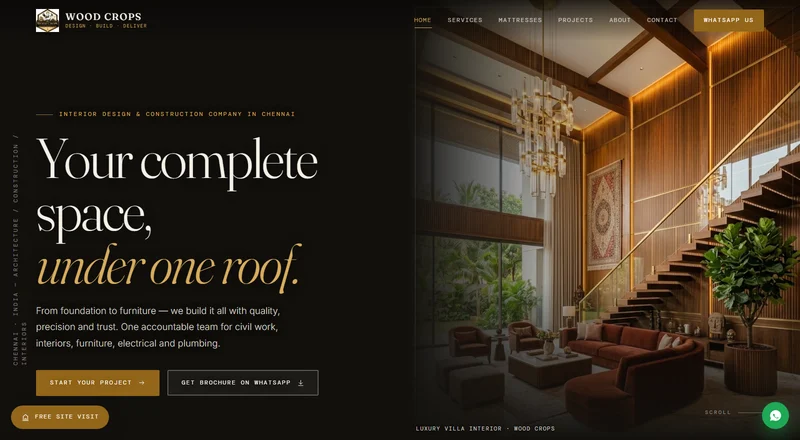
Wood Crops
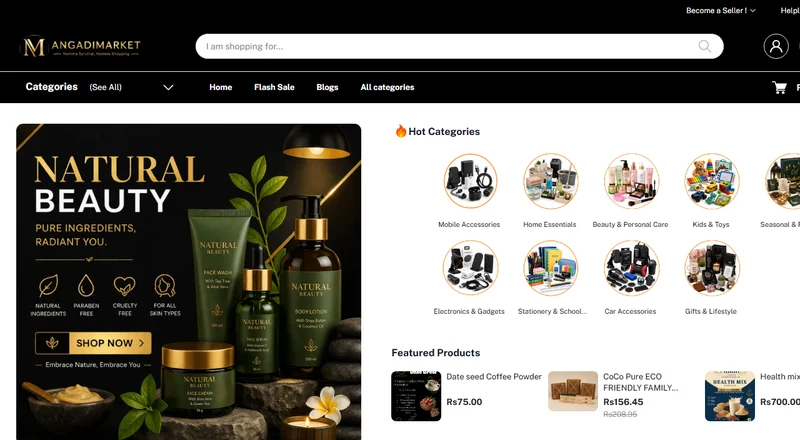
Angadi Market

Sri Rakhi Interiors

MSJ Jewellers

Grow Value Properties

Infibee
What Our Clients Say
Real stories from business owners who partnered with us for growth.
"AS Enterprises rebuilt our interior design studio website in under 2 weeks. Our enquiries and customer calls doubled within a month of launching. Their local SEO optimization works wonders!"
"Working with AS Enterprises for our fashion store was the best business decision. They developed a fast Shopify store and set up our Meta Ads. Our online sales tripled in 60 days!"
"From brand consulting to launching our digital presence, they were professional, prompt, and result-oriented. Direct developer communication saved us weeks of email exchanges."
Official Partners
Platforms and payment gateways we build with and integrate for our clients.
 G
Google Partner
G
Google Partner
 CC
CCAvenue
CC
CCAvenue
 S
Shiprocket
S
Shiprocket
 🛒
Shopify Partners
🛒
Shopify Partners
 R
Rediff
R
Rediff
 Z
Zoho
Z
Zoho
 ₹
Razorpay
₹
Razorpay
 P
PayU
P
PayU
 💬
tawk.to
💬
tawk.to
Ready to Work With a Team You Can Trust?
AS Enterprises helps Chennai businesses turn strategy into results. Get a free, no-obligation consultation.